Business Analysis Tutorials for Beginners and Non-IT Professionals
Learn Business Analysis basics through a structured set of beginner-friendly tutorials. Start with what Business Analysis means, understand the Business Analyst role, and then move step by step into requirements, SDLC, user stories, stakeholders, and interview preparation.
What you will learn in these tutorials
This tutorial hub is designed to help beginners understand the core concepts of Business Analysis before they move into a structured course, certification, or project-based learning path.
Business Analysis basics
Understand business problems, stakeholder needs, solution options, and how Business Analysts help organisations deliver value.
Business Analyst role
Learn what a Business Analyst does, how the role works with business and IT teams, and why communication is critical.
SDLC and software projects
Understand how software is built, common SDLC approaches, and where Business Analysts contribute in a project lifecycle.
Requirements handling
Learn the basics of eliciting, documenting, validating, and managing requirements throughout a project.
Stakeholders and interviews
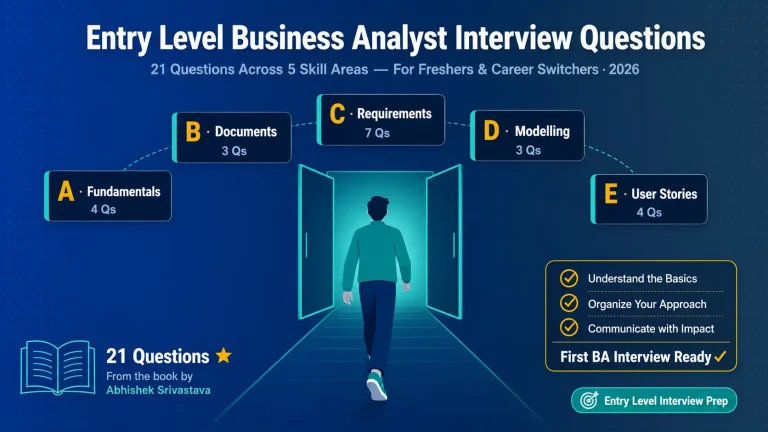
Understand stakeholder collaboration, handling difficult stakeholders, and preparing for common BA interview questions.
User stories and techniques
Get introduced to user stories, acceptance criteria, UML, requirements types, and commonly used BA techniques.
What is Business Analysis?
Business Analysis is the practice of understanding business needs, analysing problems or opportunities, and recommending changes that deliver value to stakeholders. The change may involve software, process improvement, data, policy changes, or a combination of these.
A Business Analyst works as a bridge between business stakeholders and solution teams. The BA helps clarify the problem, elicit requirements, analyse options, document needs, support solution design, and validate whether the delivered solution solves the right problem.
Why this matters for non-IT professionals
You do not need to begin with coding to understand Business Analysis. Many successful BAs come from operations, finance, customer support, sales, banking, insurance, healthcare, and domain roles.
- check_circle Your domain knowledge can become an advantage.
- check_circle You need to learn how projects, requirements, and stakeholders work.
- check_circle These tutorials give you the foundation before advanced training.
Who should use these tutorials?
Use this tutorial hub if you want to explore Business Analysis in a structured way without jumping directly into paid training or certification preparation.
Freshers
Build clarity on what Business Analysis is and whether the BA role is right for you.
Non-IT professionals
Understand BA concepts without feeling overwhelmed by technology-first explanations.
Career switchers
Map your existing domain experience to BA activities such as problem analysis and stakeholder collaboration.
ECBA aspirants
Use these tutorials as a starting point before moving into a more structured ECBA preparation path.
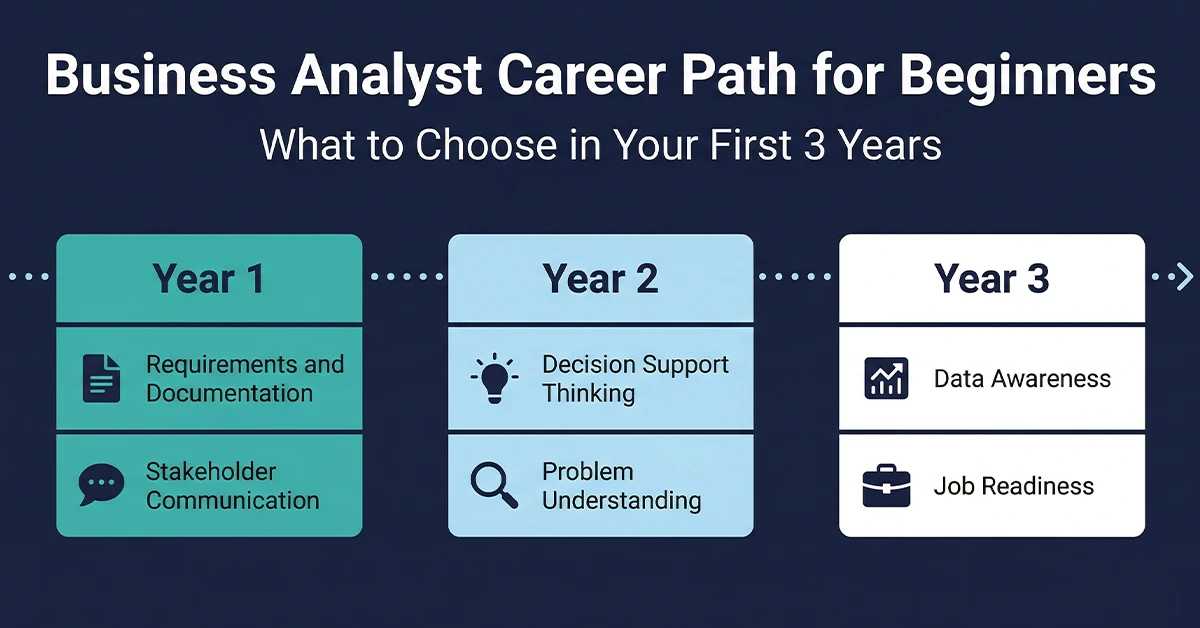
Recommended learning roadmap for beginners
Instead of watching random videos, follow this sequence so that each topic builds on the previous one.
Start with the BA role and business analysis basics
Understand what Business Analysis means and what Business Analysts actually do in projects.
Learn how software projects work
Build basic comfort with software development and SDLC approaches so you can follow project conversations.
Move into BA techniques and modelling
Understand techniques such as document analysis, elicitation, process modelling, UML, and requirements handling.
Learn user stories, requirements, and validation
Understand user stories, requirements handling, and verification and validation in Business Analysis work.
Prepare for stakeholders, documents, and interviews
Learn how to deal with difficult stakeholders, understand BRD/SRS, and prepare for common Business Analyst interview questions.
Business Analyst tutorials playlist
The 14 tutorials below cover Business Analysis basics comprehensively. They are designed for beginners and do not require prior Business Analysis knowledge.

What is Business Analysis?
Learn Business Analysis with a case study involving a ready-to-eat food company facing profitability challenges, and understand how BA enables positive organisational change.
Watch tutorial →
Who is a Business Analyst?
Understand the BA role as a liaison between business objectives and technology solutions, including needs definition, requirements, and communication.
Watch tutorial →
Skills for Business Analyst
Learn core BA skills, the value of soft skills, functional testing, and why domain knowledge can help Business Analysts progress in their careers.
Watch tutorial →
Understanding Software Development Process
Simplify the software development process with a basic scenario and understand what happens within the software development lifecycle.
Watch tutorial →
SDLC Methodologies Basics
Learn the fundamentals of major software development lifecycle approaches, including incremental, iterative, and sequential approaches.
Watch tutorial →
Top 5 Business Analysis techniques
Explore important BA techniques including document analysis, requirements elicitation, use cases, user stories, flowcharts, and data flow diagrams.
Watch tutorial →
What is UML Modelling?
Get introduced to UML modelling, its significance as a technique for Business Analysts, and its applicability across domains.
Watch tutorial →
Basics of User Stories
Learn the user story format, the User Story 3C model, and how acceptance test criteria support verification.
Watch tutorial →
Functional vs Non-functional requirements
Understand the difference between functional requirements, which describe what a system should do, and non-functional requirements, which define quality attributes.
Watch tutorial →
Verification and Validation
Understand verification and validation and how they help Business Analysts ensure accuracy and quality of project deliverables.
Watch tutorial →
How to Deal with Difficult Stakeholders?
Learn approaches for handling difficult stakeholders, including understanding concerns, risk mitigation, and escalation to sponsors.
Watch tutorial →
Key Elements of SRS | BA Interview Questions
Learn the key elements of a System Requirement Specifications (SRS) document, including scope of work, assumptions, functional/non-functional requirements, and acceptance criteria.
Watch tutorial →
SRS vs BRD | Business Requirements Vs Systems Requirements
Understand the core differences between a Business Requirements Document (BRD) and a Systems Requirements Specification (SRS) with practical examples.
Watch tutorial →
Business Analyst Interview Questions and Answers
Master your next BA interview by learning what to do and what not to do, core BA skills, scenario-based questions, and case study problem solving.
Watch tutorial →ECBA Certification Training: A Beginner’s Honest Take
ECBA is the globally recognized entry-level certification for aspiring Business Analysts who want to validate their fundamental knowledge and get hired faster.
What it does
Prepares you for BABOK v3 fundamentals, core concepts, requirements analysis techniques, and essential BA competencies.
Why it is a good career move
Helps you bypass the lack-of-experience barrier by proving you understand global BA standards to recruiters and hiring managers.
Skills you’ll gain
- check BABOK foundational knowledge
- check Requirements elicitation & lifecycle
- check Business analysis planning
- check Stakeholder collaboration
Continue your learning journey
Use these internal resources to move from awareness to skill-building, practice, and certification preparation.
Frequently asked questions
Answers to common questions beginners and non-IT professionals usually have before starting Business Analysis tutorials.