Skip to content
Business Analysis Blog
  • Home
  • Career StagesExpand
    • Aspiring BA Hub
    • Mid-Level BA Career Hub
    • Senior BA Career Hub
  • CategoriesExpand
    • AI for Business Analysts
    • Top Business Analysis Certifications
    • Domain Knowledge Hub
    • Requirements Engineering Hub
    • Stakeholder Management for Business Analysts
    • Mastering BA Interview
    • Top Tools and Skills for Business Analysts
  • Courses
  • About Us
Business Analysis Blog
Mid-Level BA Career Hub: Advance Your Career -Techcanvass
Career Hub for Mid-Level BAs

Move from Business Analyst to a High-Growth Specialist Role

Explore practical career paths, certifications, and skill tracks designed for mid-level Business Analysts who want to grow into AI, product, domain, analytics, technical, or Agile-focused roles.

Explore Career Tracks Featured Articles
Career Growth Specialize in AI, Product, Analytics, Domain & Agile
Featured Articles Practice Zone Practical Learning Student Journeys BABOK Simplified
Back to Home
Career growth Options

Career tracks, skills and Certifications for mid-level BAs

Choose the right next step based on where you want your BA career to grow: AI-readiness, product ownership, domain depth, analytics, technical capability, or Agile delivery.

🤖
AI Skills

AI Business Analyst

Learn how to use GenAI in BA work and contribute meaningfully to AI-enabled business solutions.

✓Best for: BAs preparing for AI-first project environments
Visit Course Page
🚀
Product

Product Owner

Transition from requirements ownership to product outcomes through vision, roadmaps, prioritization, and backlog decisions.

✓Best for: BAs aiming for Product Owner or product-led roles
Visit Course Page
🏦
Domain

Domain Specialized BA

Develop business domain depth in areas such as banking, insurance, healthcare, payments, or capital markets.

✓Best for: BAs who want consulting and domain-led roles
Visit Course Page
📊
Analytics

Power BI Analyst

Move beyond requirements and learn to convert business data into dashboards, insights, and decision-ready stories.

✓Best for: BAs moving toward data and reporting roles
Visit Course Page
⚙️
Technical

Technical Business Analyst

Build confidence with APIs, SQL, data flows, system design basics, and technical conversations with developers.

✓Best for: Functional BAs moving closer to technology teams
Visit Course Page
🔁
Agile

Agile Business Analyst

Strengthen your ability to work with Scrum teams, refine backlogs, slice stories, and support iterative delivery.

✓Best for: BAs working in Scrum or Agile delivery teams
Visit Course Page

Not sure which track is right for you?

You can talk to our experts for understanding the career path and the immediate next step.

Talk to an expert
Featured Articles

Featured Articles

Curated articles for mid-level BAs who want to grow into specialist, product, technical, AI, and analytics-driven roles.
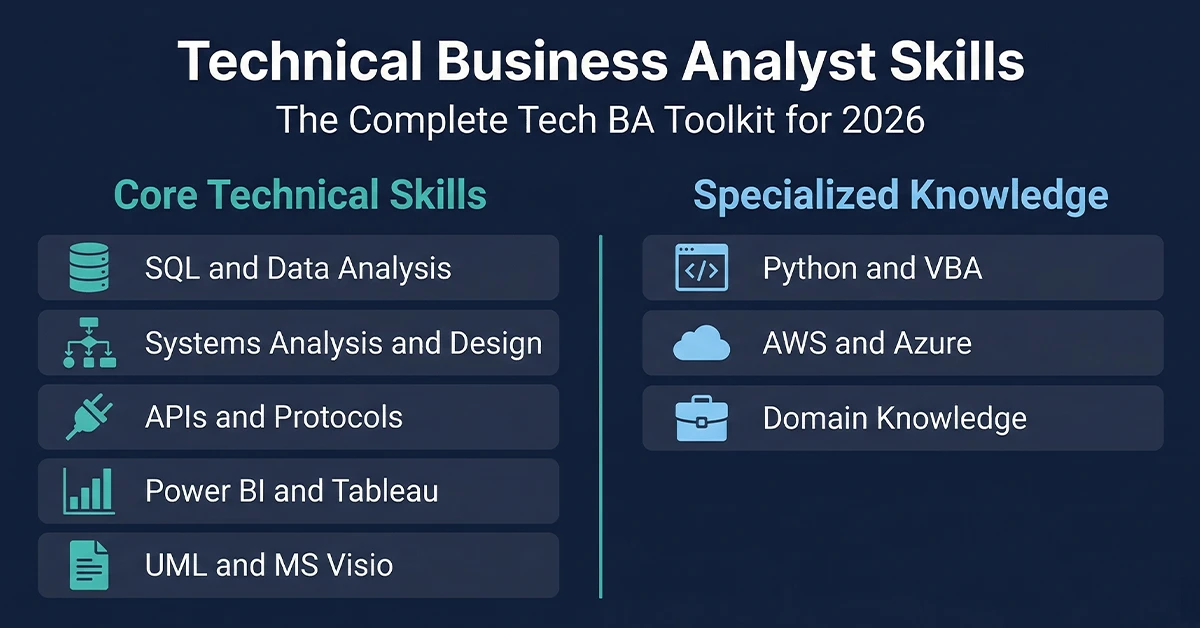
Technical BA Skills
Skills

Technical Business Analyst Skills: The Complete Guide
Read article →
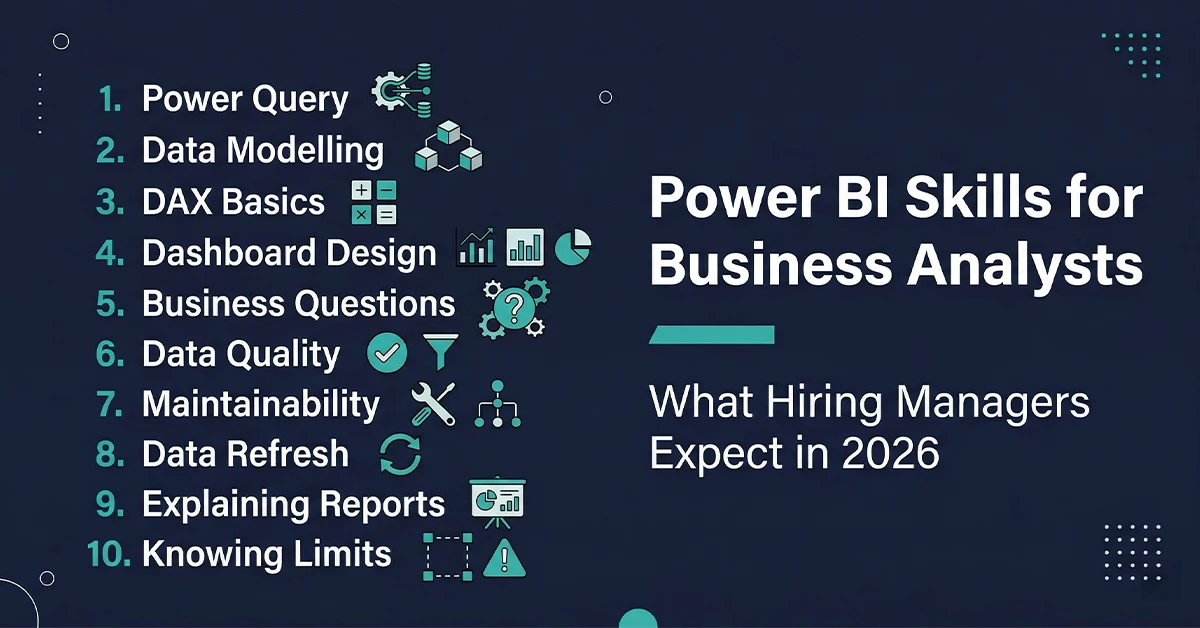
Power BI Skills
Analytics

Power BI Skills for Business Analysts: What Hiring Managers Expect in 2026
Read article →
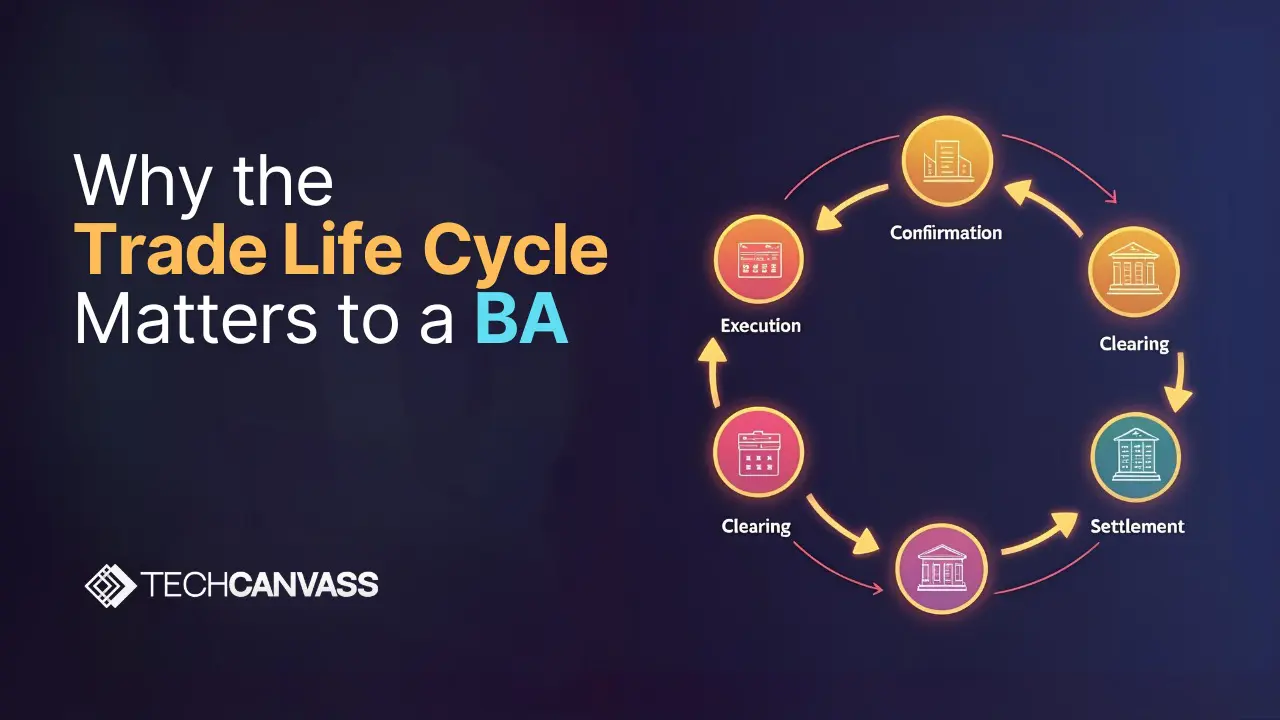
Trade Lifecycle
Domain

Trade Lifecycle for Aspiring BAs in Capital Markets
Read article →
AI Business Analyst
AI

AI Business Analyst: Bridging AI Technology and Business Strategy
Read article →
Importance of AI
AI

Importance of AI for Business Analysts
Read article →
Top AI Skills
AI Skills

Top Essential AI Skills Every Business Analyst Needs in 2026
Read article →
Investment Banking Domain Basics
Domain

Fundamentals of Investment Banking Domain

Read article →
Banking Domain Knowledge
Domain

Banking Domain Knowledge: A Complete Guide for IT and BA Professionals

Read article →
Insurance Domain Knowledge
Domain

Insurance Domain Knowledge: A Complete Guide for IT and BA Professionals

Read article →
US Healthcare Domain
Domain

US Healthcare Domain Explained: Key Concepts for IT and BA Professionals

Read article →
Role of an Agile Business Analyst
Agile

What is the Role of an Agile Business Analyst?
Read article →
Payments Domain Knowledge
Domain

Payments Domain Knowledge: A Complete Guide for IT and BA Professionals
Read article →
Telecom Domain Knowledge
Domain

Telecom Domain Knowledge: A Complete Guide for IT and BA Professionals
Read article →
CCBA Certification Cost
Certification

CCBA Certification Cost for Different Countries
Read article →
CCBA vs CBAP
Certification

CCBA vs CBAP: Which Is Better To Study For?

Read article →
How to become a Product Owner
Guide

How to Become a Product Owner: A Complete Guide

Read article →
Practice Zone

Sample Questions & Mock Tests

Practice with real exam-style questions and explanations across certifications that matter for mid-level Business Analysts.

📝

CCBA Exam Sample Questions

Practice BABOK-aligned scenario questions with answers and explanations.

Take the Mock Test
🔁

IIBA-AAC Mock Questions

Prepare for Agile Analysis Certification with agile scenario-based practice.

Practice Now
🚀

Product Owner Sample Questions

Test your understanding of Product Ownership, backlog, MVP, roadmap, and POA concepts.

Start Mock Test
Practical Learning

Hands-on Tutorials and Guides

Use these practical tutorials to strengthen everyday BA delivery skills such as user stories, use cases, documentation, and Agile requirements.

View all →
✍️

Writing Effective User Stories: A Complete Tutorial

Learn how to write useful user stories, acceptance criteria, and backlog-ready requirements.

📘

User Stories vs Use Cases: Key Differences Explained

Understand when to use user stories, when to use use cases, and how they fit Agile and traditional projects.

Student Journeys

Real-life success stories

Hear directly from Business Analysts who have successfully leveled up their careers through strategic growth and certification.
Pooja's CCBA Success Story
Success Story • Canada

Business Analyst Pooja’s CCBA Success Story

Mohammad's CCBA Success Story
Success Story • India

Mohammad’s CCBA Success Story

How to crack CCBA on the first attempt
Tips & Story

How to crack CCBA on the first attempt

From Business Analyst to Product Owner
Career Transition

From Business Analyst to Product Owner

BABOK Simplified

BABOK Simplified

Master the world’s most recognized standard for business analysis with curated guides and tutorials designed for mid-level professionals.

📚

Introduction to the BABOK Guide for ECBA Aspirants

A clear starting point for anyone new to BABOK and the IIBA framework.

📄

IIBA BABOK Guide Version 3: What’s Inside

A walkthrough of knowledge areas, perspectives, techniques, and the structure of BABOK v3.

🧠

Tips to Memorize the BABOK Techniques

Practical mnemonics and tricks for remembering BABOK techniques faster.

BABOK Study Guide

The ultimate companion for mastering BABOK knowledge areas. Simplify complex concepts with real-world examples and exam-ready summaries.

Coming Soon Download Sample Chapter
Certification Guide

AI Business Analyst Course: A Mid-Level BA’s Honest Take

Three years into my BA career, I started feeling something most BAs are quietly worried about. AI was creeping into every part of our work, and I was using ChatGPT in random ways without any real method. That gap between using AI casually and using it strategically is huge, and it shows up the moment a stakeholder asks you to lead an AI initiative. The AI Certification for Business Analysts at Techcanvass helped me close that gap, and here is my honest take.

What Does It Do

This is a 2 week live online IIBA endorsed course built specifically for BAs. You learn AI fundamentals, machine learning basics, generative AI concepts, large language models, prompt engineering, and the AI Solution Development Lifecycle (ASDLC). You also work through a capstone project, get a 50 plus prompt library with templates and examples, and earn a digital badge plus certification at the end. The focus is not on becoming a data scientist. It is on integrating AI into every stage of your BA work, from requirement gathering to stakeholder engagement to solution recommendations.

Why Is This a Good Career Move

Around 85 percent of organisations are integrating AI into their processes right now. That means BAs who understand AI are getting picked for the most visible projects, while the ones who do not are slowly being left out. Roles like AI Business Analyst, GenAI Strategy Analyst, and AI Product Specialist did not exist three years ago, and they pay a clear premium today. This is one of those certifications where being early actually matters.

Skills Required

Hard skills: Understanding of AI, ML, GenAI, and LLM basics, prompt engineering across different patterns, working with AI tools like ChatGPT and Copilot, applying the ASDLC to real projects, and using AI for requirement analysis and process automation.

Soft skills: Strategic thinking to spot AI use cases, change management for teams who fear AI, ethical judgement around bias and data privacy, and the ability to translate AI capabilities into business language for non technical leaders.

Certifications

This course works really well for mid level BAs around the three year mark. It pairs well with CCBA on the IIBA side and with the Technical BA or AI Agents course if you want deeper execution skills. A combination of CCBA plus AI Business Analyst is one of the strongest profiles you can build for the next few years.

It Is Not About Hard Skills in the Age of AI, It Is All About Soft Skills

Knowing prompt engineering and AI tools is becoming table stakes. What separates great AI BAs from average ones is the ability to ask why a process should be automated at all, who gets affected, and what risks are being introduced. That kind of judgement, empathy, and clear communication is what makes AI initiatives actually succeed.

Certification Guide

IIBA CPOA Certification Training: A Mid-Level BA’s Honest Take

Three years into my BA career, I noticed something interesting in my project meetings. The Product Owner role kept getting more important, and a lot of those POs came from a BA background. The skills overlap heavily, but there is a clear shift in mindset that you only get when you train for it. The IIBA CPOA Certification Training at Techcanvass is built for exactly that shift, and here is my honest take.

What Does It Do

CPOA stands for Certified Product Ownership Analysis. It is an IIBA credential aligned to the Guide to Product Ownership Analysis. The Techcanvass course is a self paced program with 16 PD hours, covering the full POA framework across seven knowledge areas including Apply Foundational Concepts, Cultivate Customer Intimacy, Engage the Whole Team, Make an Impact, Deliver Often, Learn Fast, and Obsess About Value. You also work through 29 POA techniques like Kano Analysis, Story Mapping, Value Proposition Canvas, MVP, and Customer Journey Mapping. The course includes 500 plus practice questions, full length mock tests, flashcards, mind maps, and crossword drills.

Why Is This a Good Career Move

The numbers speak for themselves. In the US, the average Product Owner salary sits around 109,000 USD per year. Around 35 percent of business analysis professionals already practice in agile and do product ownership work. LinkedIn shows over 20 percent month on month growth in PO job postings. For mid level BAs who want to move closer to product decisions and away from pure documentation, CPOA is one of the cleanest career moves you can make in 2026.

Skills Required

Hard skills: Backlog refinement and prioritisation, story mapping, MVP scoping, customer journey mapping, persona development, value modelling, business case writing, decision modelling, and product roadmap planning.

Soft skills: Customer empathy, decision making with incomplete information, comfort with saying no when scope creeps, stakeholder negotiation across business and tech teams, and the confidence to own outcomes rather than just outputs.

Certifications

CPOA has no formal eligibility, which makes it accessible to BAs at any stage. That said, it works best for mid level BAs around the three year mark who want to step into product roles. It pairs really well with CCBA on the IIBA side and with AAC if you are working in agile environments. CCBA plus CPOA is a strong combination that signals both BA depth and product ownership capability.

It Is Not About Hard Skills in the Age of AI, It Is All About Soft Skills

AI can write user stories, slice backlogs, and even suggest sprint goals now. What it cannot do is sit with a frustrated customer, sense what is really broken in their experience, or make the tough call about which feature to kill. Product ownership is fundamentally about judgement and empathy, and those stay valuable no matter how good the tools get.

Course Guide

Domain Training Course: A Mid-Level BA’s Honest Take

Three years into my BA career, I figured out something the hard way. Tools and frameworks get you hired, but domain knowledge gets you promoted. The Domain Training Course at Techcanvass is what I wish I had taken in my first year. If you are a BA stuck doing generic work across random projects, here is why this matters.

What Does It Do

The course gives you deep industry knowledge in your chosen field. Techcanvass offers 11 tracks including Banking, Payments, US Healthcare, Telecom, Capital Markets, Insurance, Supply Chain, CRM, E-Commerce, CRM with Dynamics 365 Sales, and AI for Finance Professionals. Each course covers industry overview, segments, processes, key functions, and a hands on project reviewed by an expert. You get video lectures, trainer presentations, chapter quizzes, interview question banks, audio books on the mobile app, and a proficiency certificate. The IIBA endorsed tag adds credibility on your resume.

Why Is This a Good Career Move

Recruiters filter resumes by industry first. A BA with banking domain training gets shortlisted for banking roles even with a shorter project list. Top consulting firms like Capgemini, Cognizant, Accenture, and IBM actively prefer domain BAs because clients pay premium rates for them. Glassdoor data consistently shows domain BAs earning more than generalists in both India and the US. There is also a long term angle. Product owner, product manager, and consultant roles all need industry context, and domain knowledge is the bridge to those roles.

Skills Required

Hard skills: Industry fundamentals like banking products, healthcare claim cycles, telecom billing, or capital market instruments depending on the track. Process modelling, requirement elicitation, basic SQL, and familiarity with regulatory frameworks like HIPAA or RBI guidelines.

Soft skills: Active listening during stakeholder meetings, asking the right follow up questions, simplifying jargon for cross functional teams, and the patience to keep learning the business beyond what the certificate covers.

Certifications

This course works best for mid level BAs with around three years of experience who want to specialise. It pairs really well with CCBA on the certification side. If you are a fresher, start with ECBA plus a domain track. If you are senior, CBAP plus domain training is a strong combination. Pick the industry that matches the kind of projects you want for the next five years, not just the highest salary.

It Is Not About Hard Skills in the Age of AI, It Is All About Soft Skills

AI tools can write user stories and draft BRDs in minutes. What they cannot do is sense the politics of a banking compliance meeting, read the tension in a healthcare stakeholder conversation, or know which question to ask when a vague requirement comes up. Domain knowledge plus strong soft skills is what makes a BA hard to replace today.

Course Guide

Power BI Course: A Mid-Level BA’s Honest Take

Three years into my BA career, I noticed the same pattern in every project. Stakeholders did not just want requirements anymore. They wanted dashboards, real numbers, and clear visual stories. Excel was not enough, and waiting for the data team slowed everything down. That is when I picked up the Power BI Course at Techcanvass, and it genuinely changed how I work. Here is my honest take.

What Does It Do

The course is a 4 week live online program aligned with the Microsoft PL-300 certification. The 2026 syllabus covers Power BI Desktop, Power Query, DAX, data modelling, schema design, interactive dashboards, bookmarks, filters, RLS, and report publishing. What stands out is the AI integration. Microsoft Copilot is woven into every module, so you learn to use it for DAX suggestions, debugging, layout recommendations, and natural language queries. There is also a self paced version with foundation level content, plus a real life capstone project and lifetime LMS access.

Why Is This a Good Career Move

The numbers back this up. The global data and analytics market is expected to hit 184 billion dollars by 2027, growing at nearly 13 percent CAGR. Around 29 percent of employers specifically look for Power BI skills when hiring data analysts. For BAs, this is the easiest way to stop being just the requirements person and become someone who actually delivers insights. Roles like Power BI Analyst, BI Developer, and Data Visualisation Specialist all open up once you have this on your resume.

Skills Required

Hard skills: Power BI Desktop, Power Query for data transformation, DAX formulas, data modelling with star and snowflake schemas, managing relationships, building interactive visuals, RLS for security, and basic understanding of Microsoft Copilot for AI assisted analysis. Excel knowledge helps you learn faster.

Soft skills: Visual storytelling, the ability to ask the right questions about what stakeholders actually want to see, designing reports that decision makers can read in seconds, and clear communication when presenting numbers to non technical audiences.

Certifications

This course suits mid level BAs around the three year mark perfectly. By that stage, you are ready to step beyond pure requirements work. Power BI plus PL-300 pairs really well with CCBA on the IIBA side. If you want to go deeper into analytics, IIBA CBDA is a natural follow up. Either combination makes you a much sharper analyst.

It Is Not About Hard Skills in the Age of AI, It Is All About Soft Skills

Copilot can write DAX, suggest layouts, and even generate insights from plain English questions now. What it cannot do is decide which metric actually matters to the business, or push back when a stakeholder asks for a vanity dashboard that hides the real problem. Strong analytical thinking, judgement, and storytelling are what turn data into decisions.

Course Guide

Technical Business Analyst Course: A Mid-Level BA’s Honest Take

Three years into my BA career, I hit a wall. I could write user stories and run stakeholder meetings, but the moment developers started talking about APIs, schemas, or microservices, I felt lost. That is when I looked into the Technical Business Analyst Course at Techcanvass, and it changed how I work. If you are a functional BA stuck in the same place I was, this might be for you.

What Does It Do

The course helps you shift from the “what” of requirements to the “how” of implementation. Over three weeks of live online training, you cover nine modules including system architecture, REST APIs with hands on Postman testing, database fundamentals with ER diagrams, system design basics, SQL, and AI tools for BAs. There is also a capstone project where you design the backend logic for an e-commerce API ecosystem. It is practical, not just theory.

Why Is This a Good Career

Demand for technical BAs has outpaced supply, and the salary numbers reflect that. Mid level technical BAs in India earn between 15 to 28 lakhs per year, and senior roles cross 32 lakhs. In the US, the range goes from 110k to over 200k for senior positions. Fintech, healthcare tech, and e-commerce are hiring aggressively. Annual growth is projected at 11 to 14 percent through 2026, which is faster than most other roles.

Skills Required

Hard skills: SQL queries and joins, REST API basics, JSON, Postman, ER diagrams, system design fundamentals, cloud concepts, and technical documentation like TSDs and data mapping sheets.

Soft skills: Stakeholder communication, asking the right questions to developers, handling ambiguity, simplifying technical concepts for business teams, and patience when bridging two very different audiences.

Certifications

The Technical BA course is built for mid level BAs with around three years of experience, which is exactly where I was when I joined. By that stage, you already have CCBA on your radar or in hand, and the Tech BA credential pairs really well with it. Together they show that you understand business analysis fundamentals and can also handle the technical execution side. If you are eyeing CBAP later, this course gives you the implementation depth that senior reviewers look for.

It Is Not About Hard Skills in the Age of AI, It Is All About Soft Skills

Here is the part that took me a while to accept. AI can draft a BRD, write SQL, and even suggest API designs in seconds. What it cannot do is sit with a confused stakeholder, read the room, and pull out the real requirement hiding behind the polite one. Tools have made hard skills cheap. Listening, negotiating, and clear thinking are what make a BA hard to replace today.

Certification Guide

IIBA Agile Analysis Certification (AAC): A Mid-Level BA’s Honest Take

Three years into my BA career, I realised something. Almost every project I joined was running on Scrum or some flavour of Agile, but my training had been built around waterfall thinking. That mismatch shows up in sprint planning, backlog refinement, and stakeholder calls. The IIBA Agile Analysis Certification (AAC) Course at Techcanvass is what helped me close that gap, and here is my honest take.

What Does It Do

AAC is IIBA’s certification for Business Analysts working in Agile environments. The Techcanvass course is a self paced program aligned to the Agile Extension v2 to BABOK Guide. You get 16 PD hours, a study guide, 500 plus practice questions, 4 full length mock tests, flashcards with 100 plus terms, crossword puzzles, and matchmaking drills. The syllabus covers the Agile mindset, three horizons (Strategy, Initiative, and Delivery), and all 24 Agile analysis techniques like Personas, MVP, Portfolio Kanban, and Purpose Alignment Model. English subtitles and lifetime access make it easy to fit around work.

Why Is This a Good Career Move

The numbers speak for themselves. Around 94 percent of organisations practice Agile in some form, and 64 percent of companies report better software delivery after adopting it. That means most BA jobs you apply for in 2026 will be Agile roles. Having AAC on your resume tells recruiters you do not just attend stand ups, you actually understand how to do business analysis inside iterative delivery. It also opens the door to product owner and Agile coach roles down the line.

Skills Required

Hard skills: Solid grasp of the Agile Manifesto, Scrum framework, BACCM, the three Agile Analysis horizons, and the 24 techniques. Backlog management, story slicing, MVP scoping, and release planning are core skills you will use daily.

Soft skills: Comfort with ambiguity, ability to make decisions with incomplete information, collaboration across self organising teams, and the confidence to push back when scope creep starts during a sprint.

Certifications

AAC has no formal eligibility, but IIBA recommends 2 to 3 years of Agile related experience, which is exactly the mid level BA sweet spot. It pairs really well with CCBA if you want to validate both your business analysis depth and your Agile capability. If you are heading toward product roles, consider following AAC with CPOA later.

It Is Not About Hard Skills in the Age of AI, It Is All About Soft Skills

AI tools can write user stories, prioritise backlogs, and even suggest sprint goals now. What they cannot do is read the room when a team is burnt out, negotiate scope with a stakeholder who keeps changing their mind, or build trust with developers across time zones. Agile is fundamentally a people first approach, and the BAs who thrive are the ones with strong communication and facilitation skills.

Techcanvass BA Blog – Improved Footer
Techcanvass Business Analysis Blog

From your first BA role to enterprise-level analysis — practical guides, certifications, and career roadmaps by Techcanvass.

IIBA Aligned Learning
Trusted by 5,000+ BA Professionals
15+ Years in BA Education

Follow Us

Quick Links
Home About Us Courses Free Downloads Contact Us
Explore Topics
AI for Business Analysts Requirements Engineering Stakeholder Management BA Interviews Tools & Skills Domain Knowledge
Certifications
All BA Certifications ECBA Certification CCBA Certification CBAP Certification
Career Roadmaps
Aspiring BA Hub Mid-Level BA Hub Senior BA Hub Global BA Roadmap BA in USA BA in Canada

Get Weekly BA Insights

High-signal updates every Sunday — interview tips, career guides, and certification news. No spam.


© 2026 Techcanvass. All rights reserved.
Privacy Policy Terms & Conditions Sitemap
  • Home
  • Career Stages
    • Aspiring BA Hub
    • Mid-Level BA Career Hub
    • Senior BA Career Hub
  • Categories
    • AI for Business Analysts
    • Top Business Analysis Certifications
    • Domain Knowledge Hub
    • Requirements Engineering Hub
    • Stakeholder Management for Business Analysts
    • Mastering BA Interview
    • Top Tools and Skills for Business Analysts
  • Courses
  • About Us
Search