How to Become a Business Analyst in USA: Skills, Salary & Career Path
Learn how to become a Business Analyst in USA with U.S.-focused skills, certifications, salary ranges, career paths, job-market context, and practical guidance.

Why the U.S. needs more Business Analysts
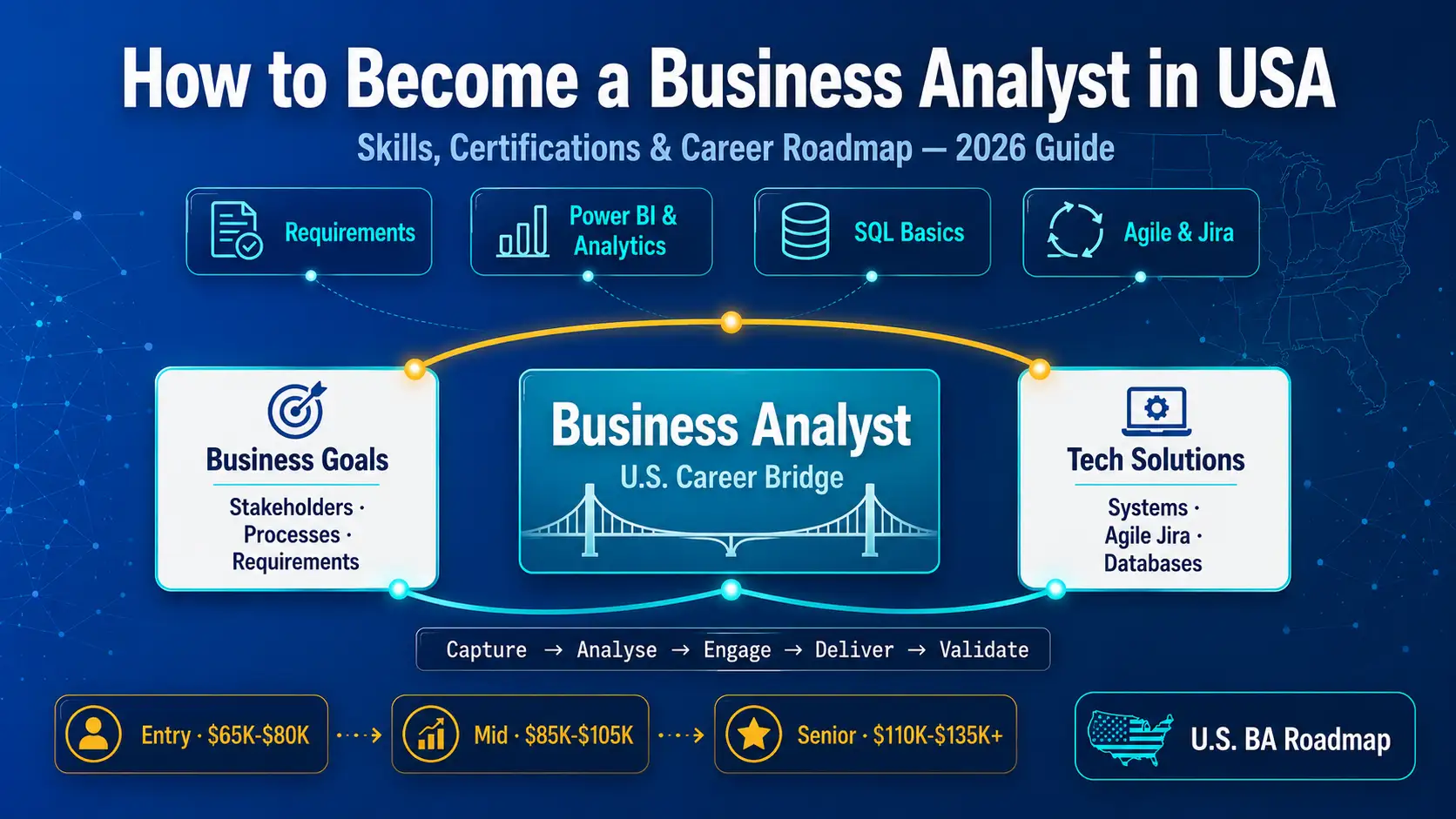
Business Analyst in USA is a role that bridges business goals and technical solutions, blending strategic thinking, problem-solving, and technology awareness. As organizations modernize systems, automate workflows, and lean on data to make decisions, that bridge becomes harder to do without.
If you already have some IT exposure, perhaps you have worked with software tools, databases, or supported IT projects, you are a step ahead. The sections below show how to turn that experience into a rewarding BA career in the United States.
Business Analyst Career in USA: Video Guide
Watch this video alongside the U.S.-focused roadmap to understand the Business Analyst career path, skills, and practical next steps.

How to Become a Business Analyst in USA
Watch the embedded video for additional guidance related to building a Business Analyst career and use the rest of this page for U.S.-specific skills, salary, certifications, career progression, and market context.
What does a Business Analyst do?
A Business Analyst is the translator between business users and technology teams. The goal is to understand what the organization needs and help design solutions that meet those needs efficiently and effectively.
Capture requirements
Understand business goals and document clear functional requirements for the technology or process team.
Analyse processes
Map current processes and identify inefficiencies, risks, and gaps that need addressing.
Engage stakeholders
Collaborate across the organization, from management and end-users to developers and testers.
Support delivery
Work with product, design, development, and QA teams to ensure the right solution is built.
Validate solutions
Support UAT and acceptance to confirm the solution meets the original business need.
Work across industries
Healthcare, government, finance, logistics, and technology sectors all depend on BAs.
A logistics company integrating predictive analytics into its delivery system. The Business Analyst collaborates with data scientists to define key performance metrics, ensures the data pipeline aligns with business goals, and helps design dashboards that improve delivery efficiency and customer satisfaction.
Why Business Analysts are in high demand
The U.S. Bureau of Labor Statistics classifies Business Analysts under Management Analysts, a category projected to grow about 9% through 2034, faster than average across all occupations.
Digital transformation
Almost every organization is upgrading operations with digital tools or moving infrastructure to the cloud, creating constant demand for BAs.
Data-driven decisions
Companies increasingly rely on analytics and interactive dashboards to track performance and inform strategy. BAs bridge the data and the decision.
Agile, cross-functional teams
There is strong demand for professionals who can connect technical experts with non-technical stakeholders to drive collaboration and delivery.
What background and skills do you need?
You do not need a computer science degree, but a basic understanding of IT gives you a big advantage. If you have worked with systems like Salesforce, SAP, ServiceNow, or even Excel macros, you already understand how business processes translate into software logic.
Most BAs hold a bachelor’s degree in business, IT, economics, or a related field. In practice, hands-on experience with systems or projects often carries more weight than the degree itself.
| Business Skills | Technical / Analytical Skills |
|---|---|
| Communication & documentation | Excel, SQL, or data querying |
| Process mapping & problem solving | Power BI, Tableau (basic dashboards) |
| Stakeholder management | Understanding of databases and APIs |
| Requirements gathering | Familiarity with Agile, Jira, or Scrum |
Career path and growth opportunities
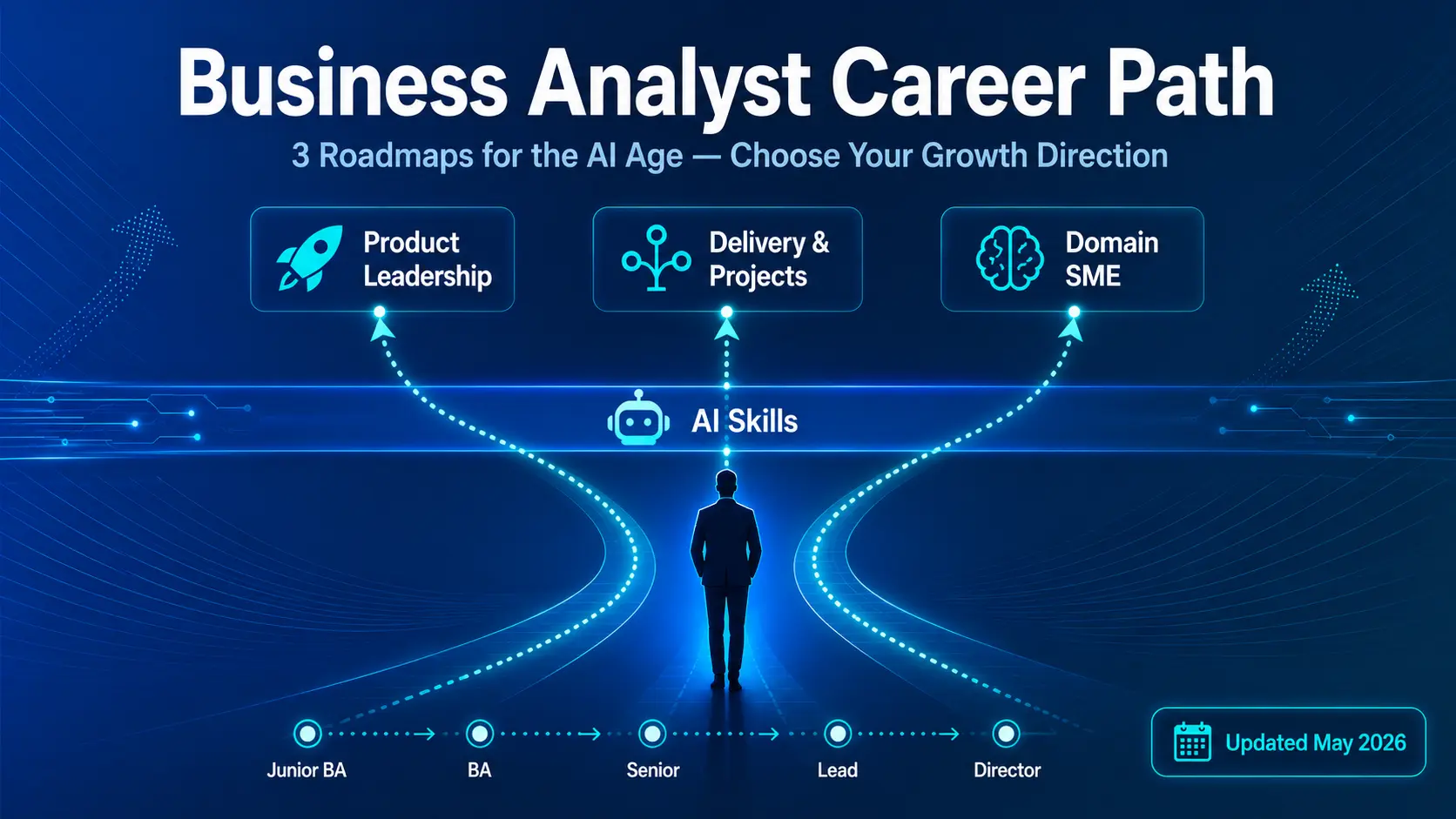
Business analysis offers several paths depending on your interests, from process improvement to systems integration or analytics. Here is how a typical U.S. BA career progresses.
Early stage (0 to 3 years)
Entry-level roles: Junior Business Analyst, Project Coordinator, System Analyst Assistant, or Business Process Associate. Focus on documentation, user support, and learning to write requirements and user stories.
Mid-level (3 to 7 years)
Core roles: Business Analyst, Functional Analyst, Data Analyst, or Product Analyst. Lead workshops, manage requirements for major projects, and coordinate with technical teams.
Senior level (7+ years)
Leadership and strategic roles: Senior Business Analyst, Business Architect, Product Manager, or Program Manager. Influence company strategy and guide digital transformation initiatives.
Alternative career tracks
BI & Data Analytics
If you like working with data, move toward Business Intelligence or Data Analytics roles.
BPM & Operations
If you prefer process design, grow into Business Process Management or Operations Excellence.
Product & Architecture
If you enjoy technology integration, Product Management or Solution Architecture are natural next steps.
Salary and job outlook in the U.S.
Business Analysts are among the better-paid professionals across the business and IT spectrum. Compensation varies by experience level, sector, and location.
| Experience Level | Salary Range (USD per year) |
|---|---|
| Entry Level | $65,000 to $80,000 |
| Mid-Level | $85,000 to $105,000 |
| Senior / Lead | $110,000 to $135,000+ |
Top-paying sectors
Finance, healthcare technology, consulting, and government contracting offer the strongest compensation.
High-demand cities
Washington D.C., New York, Boston, Austin, San Francisco, and Chicago lead on BA job postings and pay.
Contract & consulting
Business Analysts can often earn significantly more through hourly rates or project-based contract work.
Considerations for limited IT exposure
If you do not have, or have limited, IT exposure there are specific ways to position your existing experience and quickly build the technical literacy employers expect.
Leverage your domain expertise
- Many BA roles value domain knowledge highly, especially in regulated industries
- Healthcare, manufacturing, banking, finance, and government all prize domain BAs
- Highlight workflow design, submission processes, and systems change experience
- Stakeholder management in a regulated context is a premium skill
- Frame domain knowledge as a risk and compliance advantage
Build technical and analytical fluency
- Learn SQL basics for data validation and querying
- Practice Power BI or Tableau for data-driven BA positioning
- Understand process modelling tools like draw.io or Visio
- Gain familiarity with Agile, Jira, and sprint workflows
- Learn APIs and integrations at a conceptual level
Why a little IT knowledge gives you an edge
Clearer dev conversations
You communicate more effectively with developers and testers, reducing back-and-forth and rework.
Better requirements translation
You turn business requirements into technical terms with less friction and fewer misunderstandings.
Earlier risk spotting
You foresee implementation challenges early and propose realistic solutions before they become costly.
Curious about BA salaries across regions?
Read our latest analysis of Business Analyst Salary in USA & Canada to discover earning potential and market insights.
Choose the right Business Analyst roadmap for your target market
We offer country-specific execution roadmaps for localized job requirements, certification alignment, and salary standards. Select the geography that matches your goals.
Global Business Analyst Roadmap
The standard global framework covering baseline analysis standards, frameworks, and core tools used worldwide.
Explore GlobalBA Career Roadmap for India
Guidance on Indian recruitment sectors, technology roles, hiring trends, and regional certifications.
Coming SoonHow to Become a Business Analyst in USA
Understand the U.S. BA market, demand, localized certifications, compensation guidelines, and career growth paths.
Currently ViewingBecome a Business Analyst in Canada
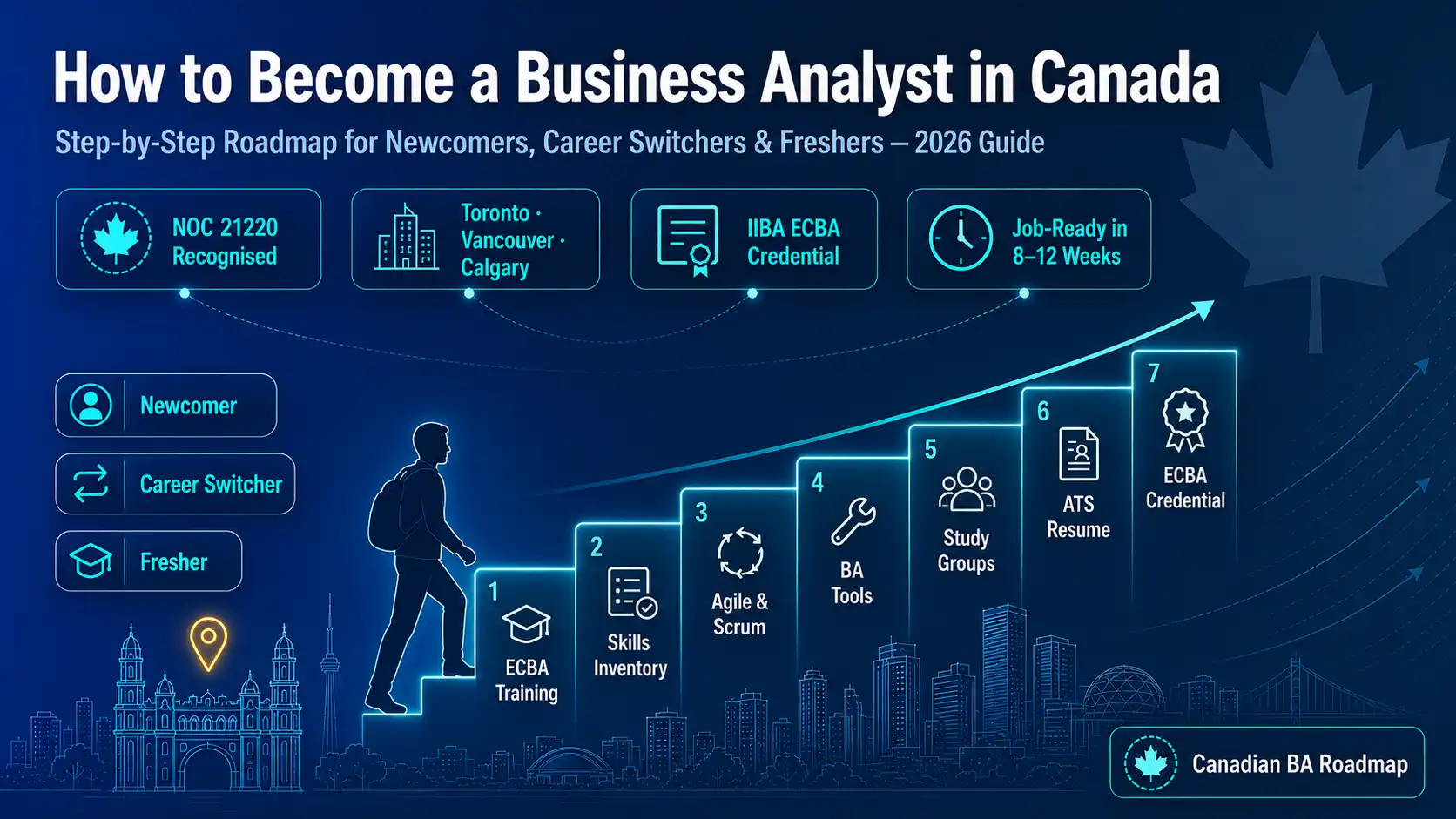
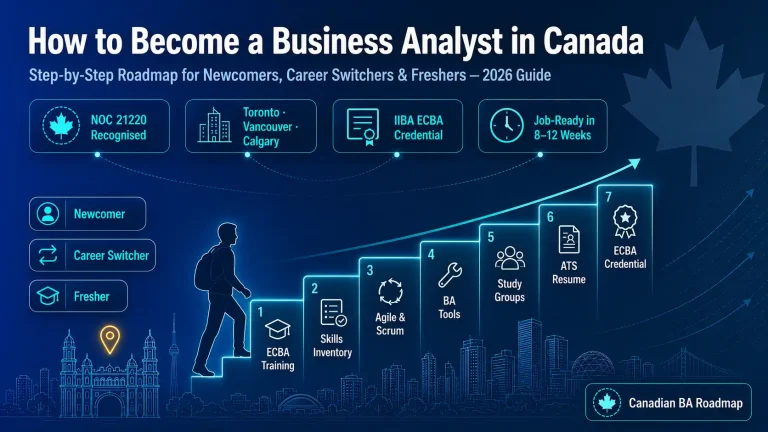
Transferability paths, IIBA ECBA training, and resume tactics to get hired across Canadian provinces.
Explore CanadaUse the Global Business Analyst Roadmap for the broader framework
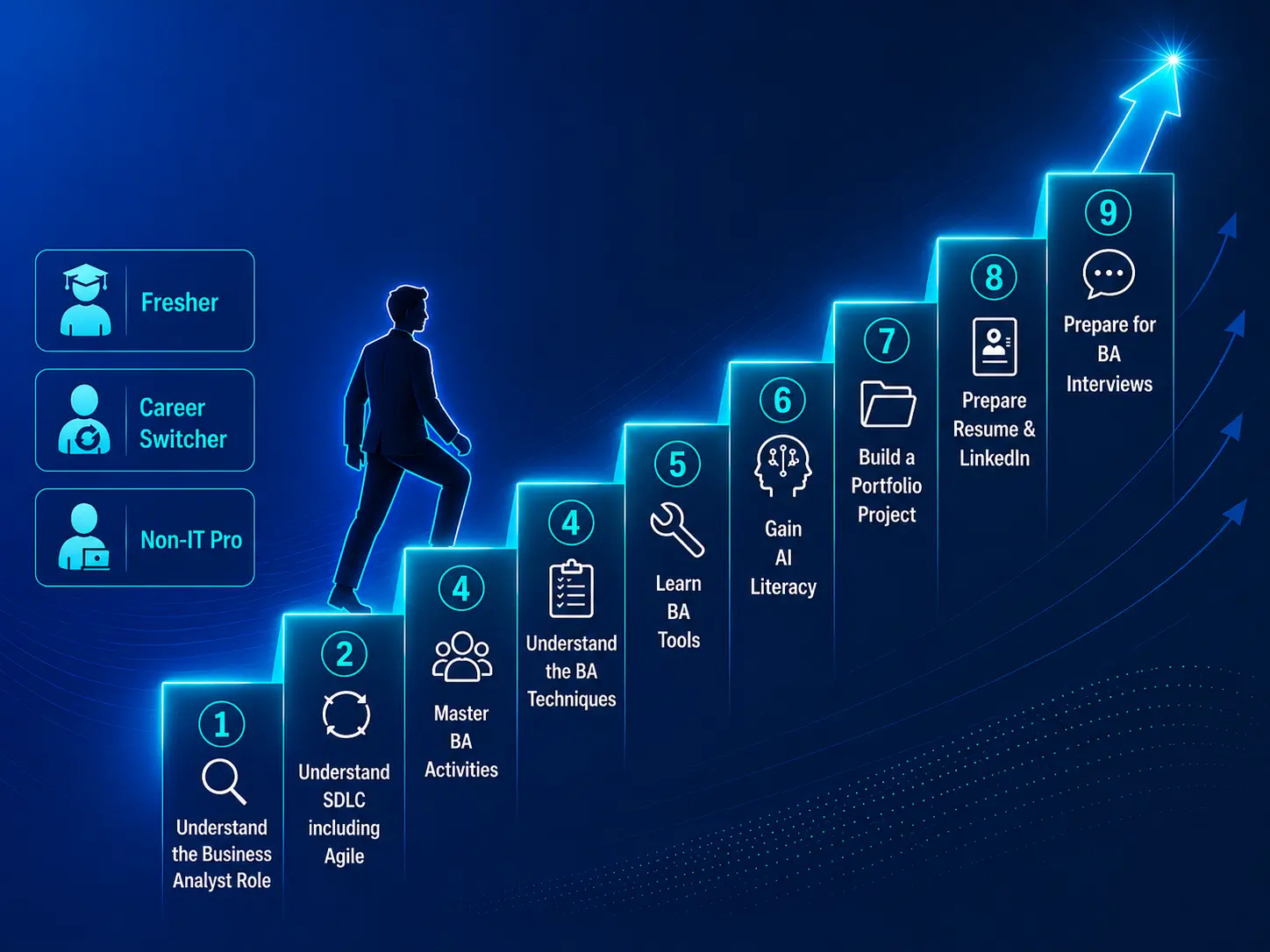
This U.S. guide focuses on the American market. Use the global Business Analyst roadmap for broader BA fundamentals, tool tutorials, portfolio guidance, and career-transition resources.
Chart your U.S. BA career with confidence
A career as a Business Analyst in the U.S. is dynamic, well-paying, and full of room to grow, especially if you already have some IT background. It rewards curiosity, clarity, and collaboration more than deep coding skills, and every project is a chance to make a measurable impact.
Starting with limited market exposure is fine. Establish a starting point, stay a continuous learner, build a strong professional network, and earn certifications to create your next big opportunity. Every role teaches something and opens the next door.
💬 Have questions? Our experts are here to help.
Join us on WhatsAppFrequently asked questions
Common questions from professionals exploring a Business Analyst career in the United States.
What does a Business Analyst in USA do?
A Business Analyst in USA acts as the link between business stakeholders and technology teams. They analyze business needs, document requirements, identify process inefficiencies, and help design and test solutions that meet organizational goals effectively.
Why are Business Analysts in high demand in the USA?
The growing digital transformation across industries has created strong demand for Business Analysts in USA. Companies increasingly depend on data-driven decision-making, agile project execution, and automation, all areas where Business Analysts play a critical role.
What background do you need for a Business Analyst career?
You do not necessarily need a computer science degree to start a Business Analyst career. A bachelor’s degree in business, IT, economics, or related fields helps, but practical experience with systems like Salesforce, SAP, or Excel macros is often more valuable.
What are the essential skills for a Business Analyst in USA?
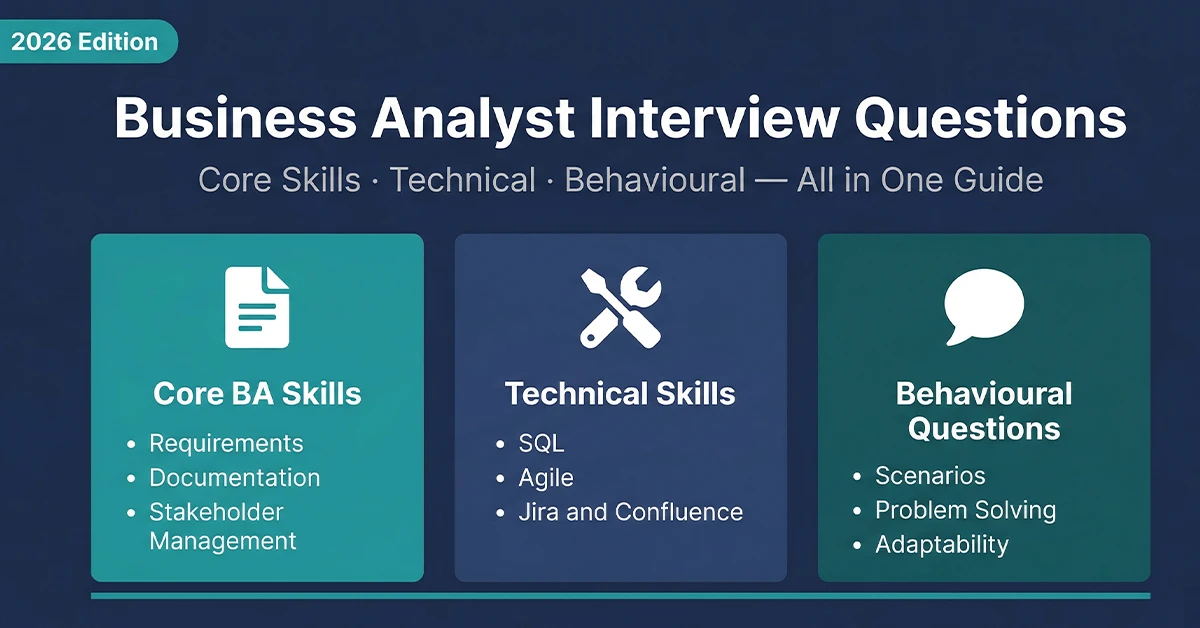
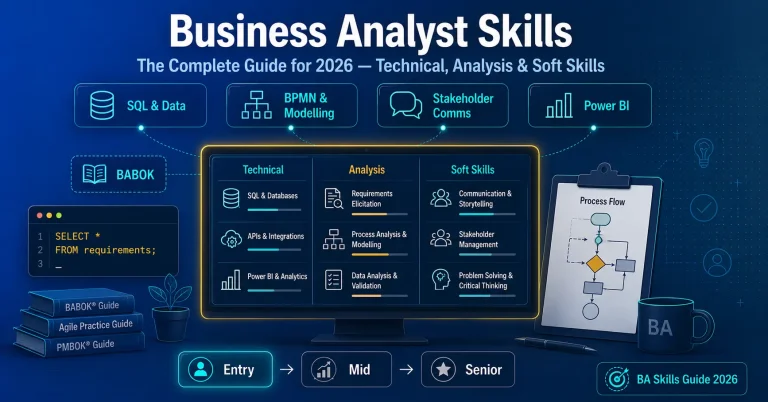
A successful Business Analyst in USA combines business understanding with technical knowledge. Core skills include communication, requirements gathering, process mapping, SQL, Excel, Power BI or Tableau, and familiarity with Agile tools like Jira and Scrum.
What certifications strengthen a Business Analyst career?
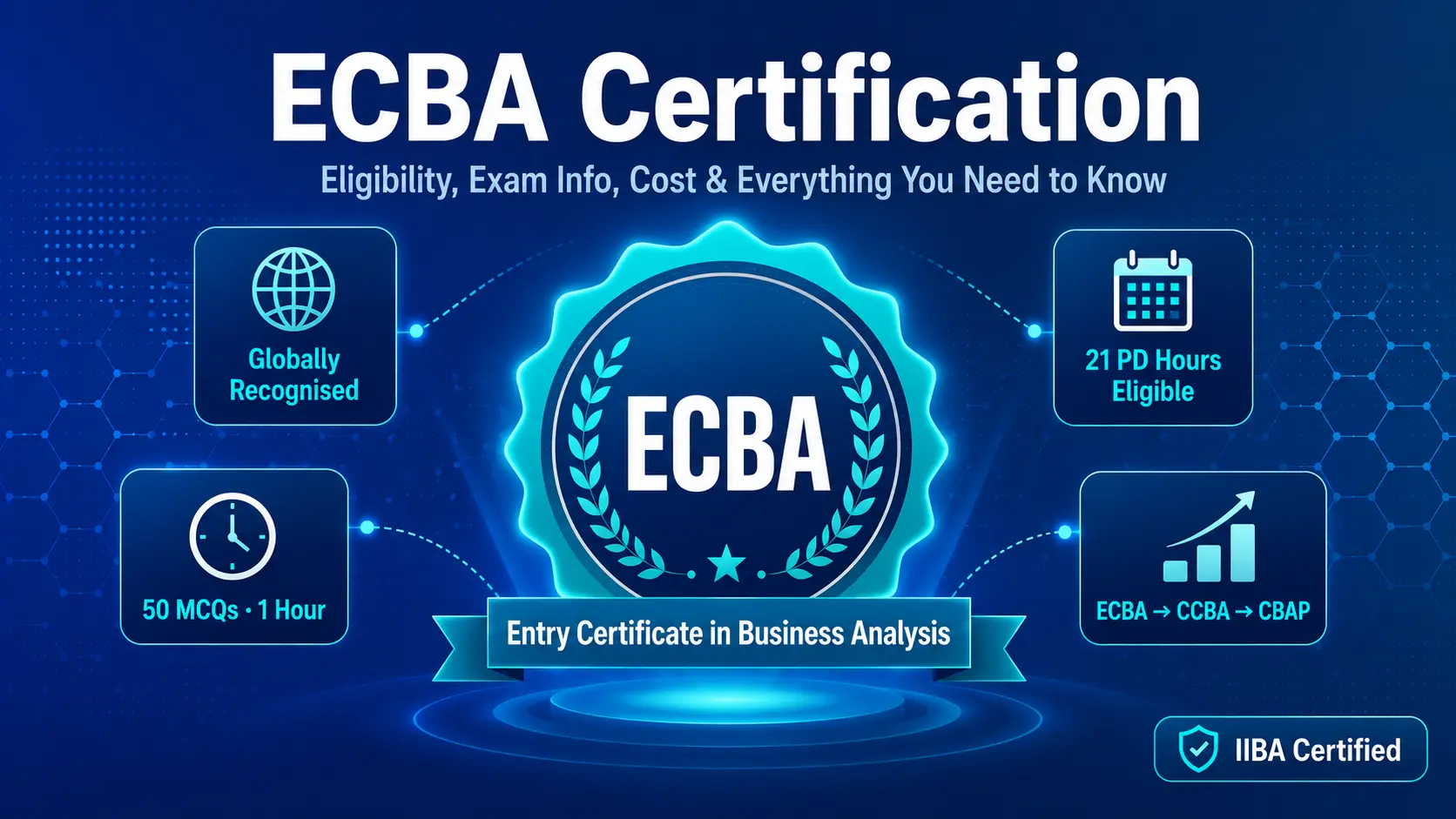
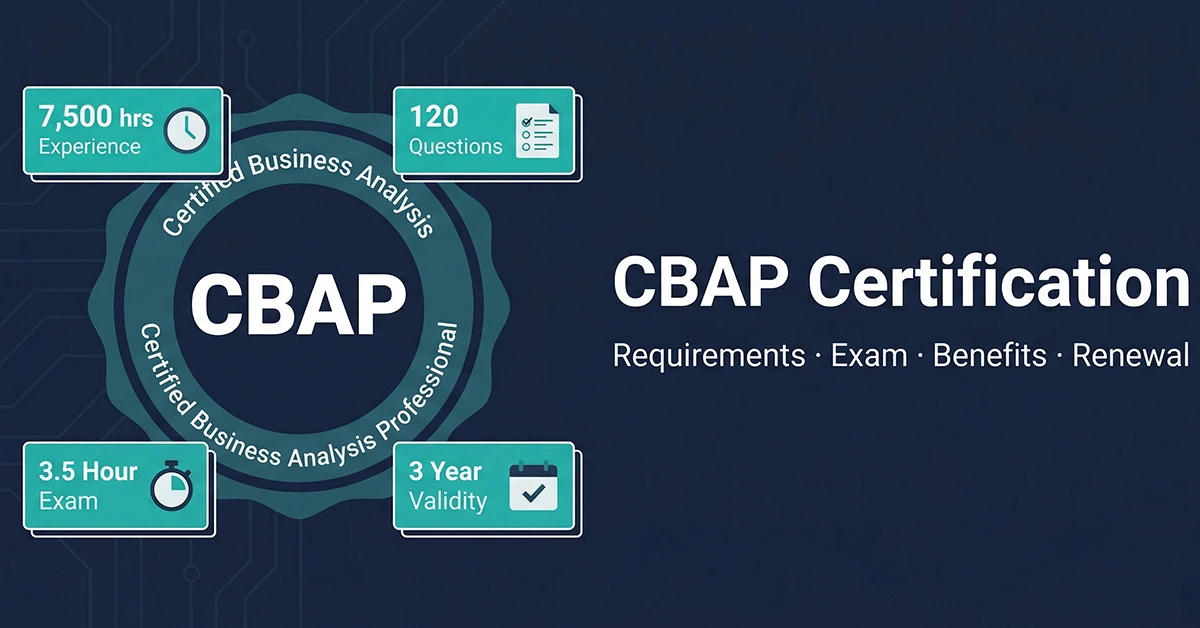
To advance your Business Analyst career, certifications like IIBA ECBA, CCBA, or CBAP add credibility. You can also consider Scrum Master (CSM), Product Owner (CSPO), or data analytics certifications such as Google Data Analytics or Power BI to enhance your skillset.
How much does a Business Analyst in USA earn?
The salary for a Business Analyst in USA varies by experience. Entry-level analysts earn around $65,000 to $80,000 per year, mid-level professionals earn $85,000 to $105,000, and senior analysts can make $110,000 to $135,000 or more, especially in finance or consulting sectors.
What are the career growth opportunities for Business Analysts in USA?
A Business Analyst career offers multiple growth paths, from entry-level roles like Junior BA or Project Coordinator to senior positions such as Business Architect, Product Manager, or Program Manager. Depending on your interests, you can also move into data analytics, product management, or business process management.
Should I follow a different roadmap for USA vs the global guide?
Use this U.S. guide when your target market is the United States. It focuses on U.S. salary context, certification positioning, career progression, and market expectations; the global roadmap covers broader BA fundamentals.