AI in Business Analytics vs AI in Business Analysis: Key Differences Explained
Both fields use artificial intelligence to help companies work smarter, but they solve very different problems. One works with numbers, models, and predictions. The other works with people, processes, and requirements.
Pick the one that matches how you actually think.
Introduction
The debate over AI in business analytics vs AI in business analysis is one of the most common questions asked by professionals today. Both fields use artificial intelligence to help companies work smarter, but they solve very different problems. One works with numbers, models, and predictions. The other works with people, processes, and requirements.
If you are planning your career or picking the right AI tools for your team, this difference matters. This guide breaks down each field in simple terms so you can decide where to focus your time and money.
What Is AI in Business Analytics?
AI in business analytics uses machine learning, statistics, and data models to find patterns hidden in large datasets. The primary focus is quantitative data, numerical metrics, and trends buried inside company records like sales, web traffic, or transaction logs.
The core goal is to move past simple data reporting. Instead of just showing what happened last quarter, AI-driven business analytics answers two harder questions: what will happen next, and what should we do about it. This shift takes teams from descriptive dashboards into predictive analytics and prescriptive forecasting.
Common Uses of AI in Business Analytics
Modern data teams apply artificial intelligence across many analytics tasks:
Machine learning models for customer churn prediction
Automated data cleaning and preparation
Real-time demand forecasting for supply chains
Natural language data queries so non-technical users can ask questions in plain English
Fraud detection and anomaly spotting
Marketing attribution and customer lifetime value modeling
Key Skills for AI in Business Analytics
Working in this field needs a mix of statistics, data interpretation, and programming. Most professionals learn Python or R for building models. Strong SQL and data visualization skills also help. Because AI outputs can be wrong or biased, validation of machine learning results is a must-have skill, not a nice-to-have.
What Is AI in Business Analysis?
AI in business analysis is a different beast. Instead of crunching numbers, it focuses on operational workflows, business processes, and human stakeholders. The core goal is to solve operational problems, gather clear system requirements, and align technology solutions with business goals.
A business analyst spends time in meetings, interviews, and workshops. Generative AI tools now help by removing the repetitive parts of that job. This lets analysts spend more energy on high-value work like negotiation, solution design, and change management.
Common Uses of AI in Business Analysis
Generative AI has changed how business analysts work every day:
Automating meeting transcriptions and action-item extraction
Drafting user stories, epics, and acceptance criteria
Synthesizing qualitative stakeholder feedback from surveys and interviews
Mapping process flows from written descriptions
Creating first drafts of BRDs, FRDs, and use case documents
Summarizing long requirement documents into readable briefs
Key Skills for AI in Business Analysis
The core skills stay very human. You need critical thinking, negotiation, stakeholder engagement, and process mapping. AI is a helper, not a replacement. A skilled business analyst uses AI to speed up documentation, then relies on people skills to validate what the AI produced and to guide stakeholders to a real decision.
AI in Business Analytics vs AI in Business Analysis: Head-to-Head
Here is a quick comparison of the two fields side by side:
| Factor | AI in Business Analytics | AI in Business Analysis |
|---|---|---|
| Primary Focus | Quantitative data and numerical metrics in large datasets | Operational workflows, business processes, and stakeholders |
| Core Goal | Predictive and prescriptive forecasting | Solving process problems and gathering requirements |
| Common Uses | Churn prediction, demand forecasting, data cleaning, NL queries | Meeting transcription, user stories, feedback synthesis, process maps |
| Main Tools | Python, R, machine learning models, BI platforms | Generative AI writers, transcription tools, diagram AI |
| Key Skills | Statistics, coding, ML output validation | Critical thinking, negotiation, stakeholder engagement |
| Works With | Datasets and algorithms | People and business processes |
Both fields use artificial intelligence to make companies more efficient. But they target different goals, different core tasks, and different operational responsibilities.
Ready to Become an AI-Powered Business Analyst?
Whichever side of this comparison pulls you in, the AI Certification for Business Analysts at Techcanvass covers the practical AI skills every modern BA needs: prompt engineering, GenAI for documentation, and how to work alongside data and analytics teams with real confidence.
Which Career Path Should You Pick?
Your choice depends on how you like to work every day.
Pick AI in Business Analytics If…
You enjoy working with numbers, writing code, and building models. You should be comfortable with statistics and open to constant learning as new machine learning techniques appear.
Pick AI in Business Analysis If…
You enjoy talking to people, mapping how work actually gets done, and translating business needs into clear system requirements. You should have strong communication skills and be curious about how businesses run.
Salary ranges overlap, but data-heavy analytics roles often pay more at senior levels because of the technical skill barrier. Business analysis roles offer wider industry choice, since almost every company needs analysts. Certifications like CBAP, CCBA, or ECBA can boost a BA career, while analytics professionals often benefit from cloud and ML platform certifications.
How the Two Roles Work Together
In real projects, these two fields depend on each other. A business analyst gathers what stakeholders need. An analytics team then builds the model or dashboard that delivers on those needs. Without a business analyst, the analytics team may build the wrong thing. Without analytics, the business analyst has no hard data to prove which solution works best.
Smart companies now train both teams to use AI tools. Business analysts use generative AI for documentation and requirement gathering. Analytics teams use AI for modeling and data preparation. Together they cut project timelines and improve accuracy of business decisions.
Where this shows up in practice: the dashboard the analytics team builds is very often a Power BI report. A BA who understands how that tool works, even at a basic level, closes the gap between the two roles faster than one who doesn’t.
Related AI BA Reads
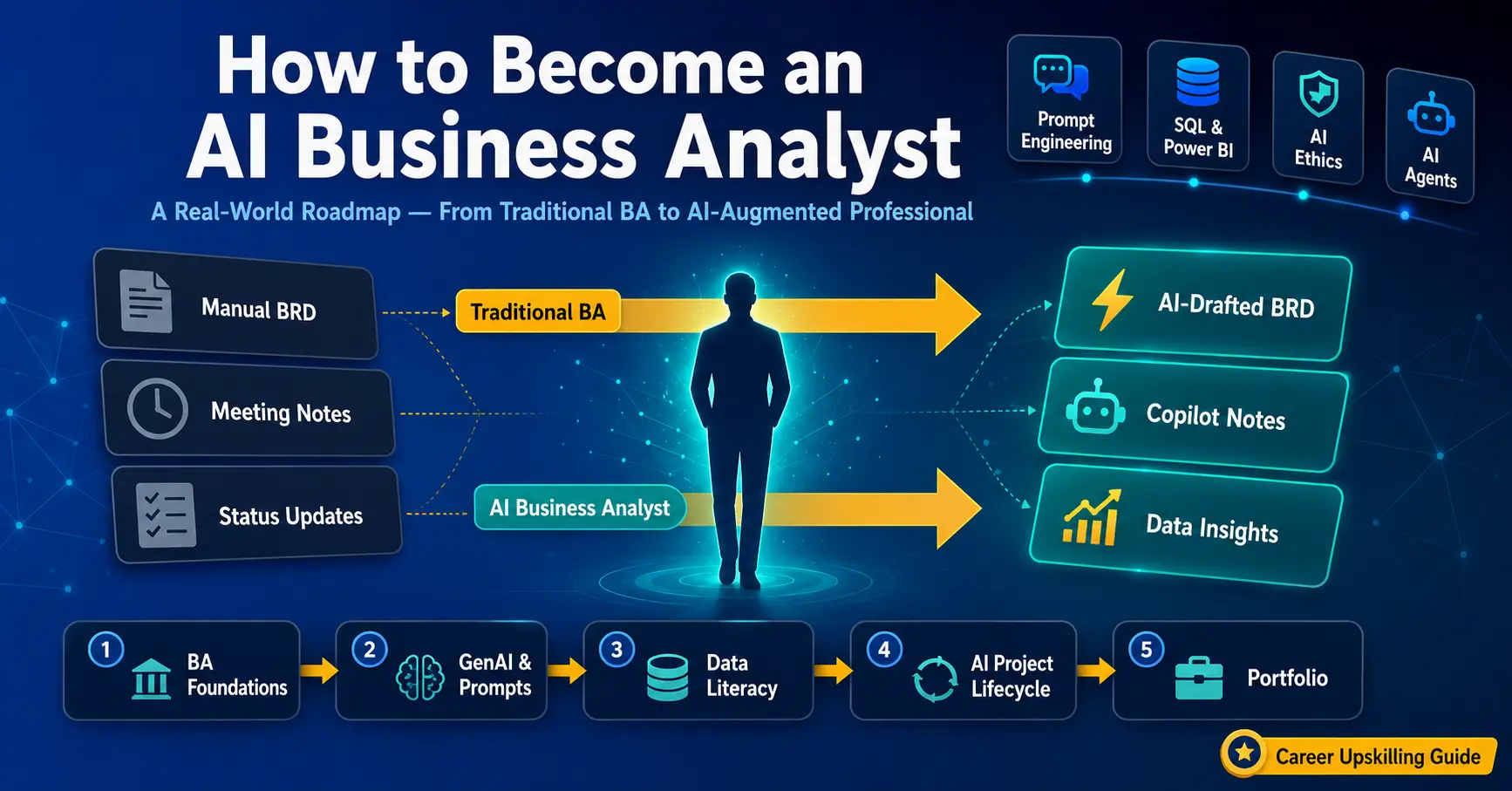
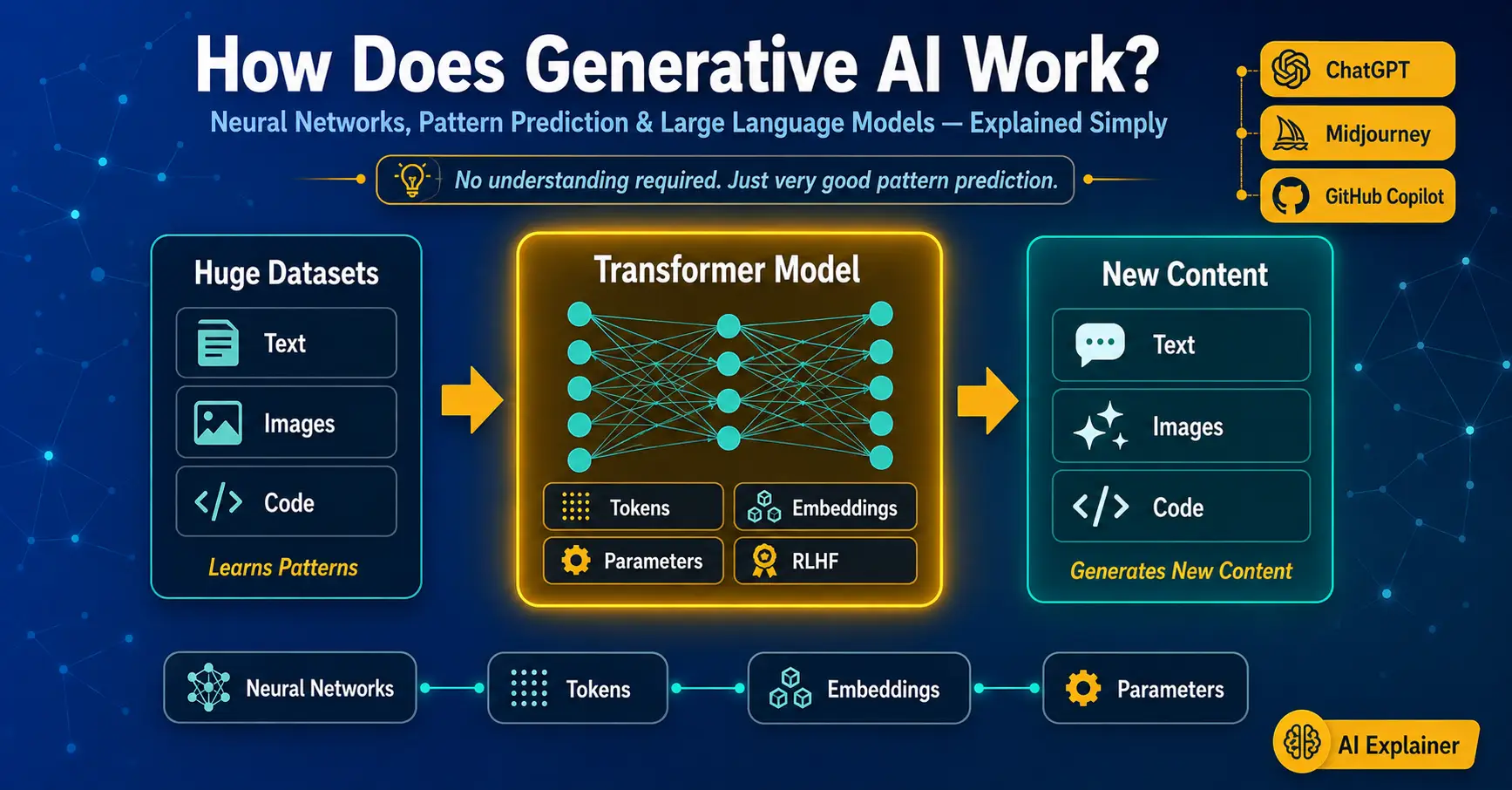
This comparison is just the starting point. Here are the guides behind Techcanvass’s AI Certification for Business Analysts, useful whichever side of the analytics-versus-analysis line you land on.
These three guides are the foundation of our AI for Business Analysts series. Read them in order for the full picture.
Frequently Asked Questions
Is business analytics the same as business analysis?
Will AI replace business analysts?
Which field is better for beginners?
Do I need coding skills for AI in business analysis?
Can one person do both roles?
Final Thoughts
The AI in business analytics vs AI in business analysis question is not about which one wins. It is about which one fits your strengths. Analytics gives you the numbers side of AI. Analysis gives you the people side. Both fields are growing fast, and both need trained professionals who can use AI without blindly trusting the output.
If you want to build a career that stays valuable in the AI era, pick the field that matches how you think, then commit to learning the tools that make you faster at it.