Listen to this article as a podcast
Table of Contents
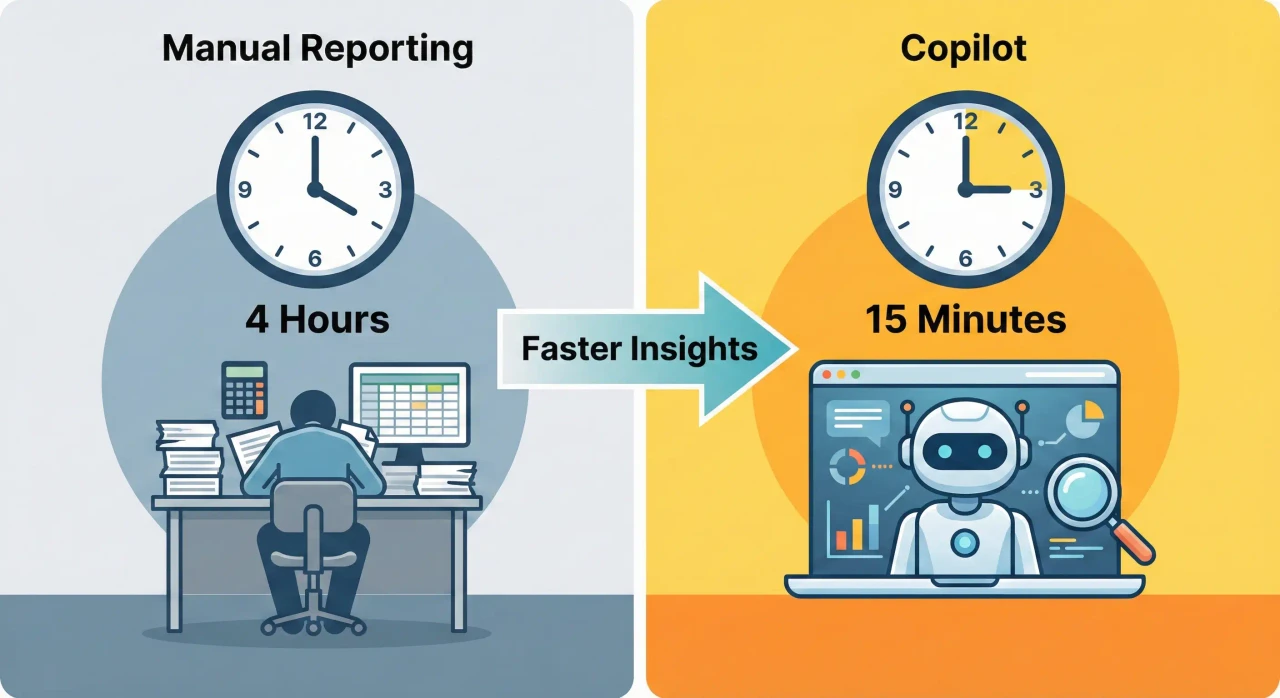
It’s Friday at 4:00 PM. You’re ready to wrap up for the week when an urgent email hits your inbox. A key stakeholder needs a last-minute change to the quarterly sales report. Specifically, they want a “Year-over-Year growth comparison by product category, filtered by the latest promotional campaign.”
In the pre-AI era, this meant a long evening of troubleshooting complex DAX measures, adjusting filter contexts, and manually updating text boxes to explain the trends. Your weekend was officially on hold.
This is where Power BI Copilot steps in.
With Microsoft’s AI-powered assistant, that same task can now start with a simple natural language prompt. As AI integration moves fast within Microsoft Fabric, a lot of data pros are getting nervous. The question on everyone’s mind is: Will AI replace data analysts?
The short answer? No. But the reality is a bit more complex. Manual reporting is on its way out, but high-level data analysis is just getting started. This article looks at the shift from “Manual Hell” to the Copilot workflow and why your human expertise is more valuable now than ever.
AI won’t replace Data Analysts. Data Analysts using AI will replace those who don’t.
Recommended Certification Courses
The “Manual Hell” vs. The Copilot Workflow
For years, the life of a BI developer was defined by the “grunt work” of report building. Workplace studies show that analyst productivity can increase by up to 40% when using AI tools like Copilot, mostly by cutting out repetitive tasks.
But relying on AI needs a solid base. You cannot effectively direct an AI assistant if you don’t understand the underlying structure of your data. This is why mastering data modeling foundations is what separates junior developers from senior analysts.