Technical Business Analyst Skills: The Complete 2026 Guide
A good analyst understands the business. A great one understands the system underneath it too. Here is exactly which technical skills matter, grouped into four clear categories, plus the order to learn them in.
Start here, then build outward.
Introduction
Strong technical business analyst skills are what turn a good analyst into a great one. A technical business analyst, often called a tech BA, sits between business teams and IT development teams. They take business goals and turn them into clear technical solutions that developers can build. To do that job well, they need a mix of data, modeling, system, and project skills.
This guide breaks down the technical skills for business analysts that matter most in 2026. It covers the tools you should know, the skills that appear in almost every job post, and a simple learning path. Three skills stand out above the rest in search results and hiring: SQL, API documentation, and Agile methods. We will start there and then go wider.
This article is a deep dive into skills. If you want the complete career roadmap, from qualifications and salary to your first 90 days on the job, read our full pillar guide.
What Is a Technical Business Analyst?
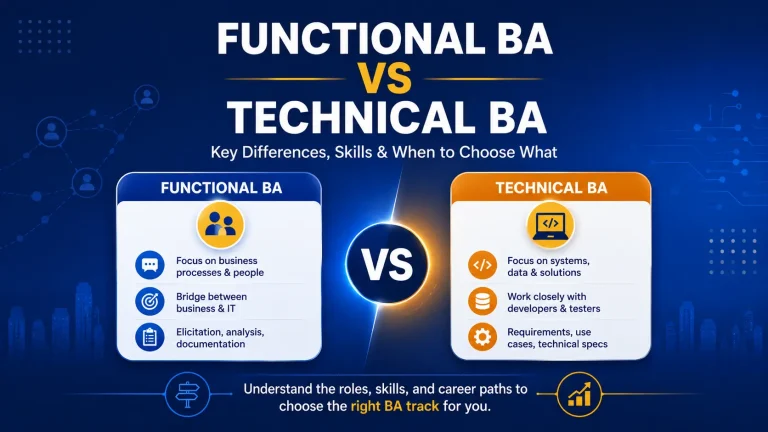
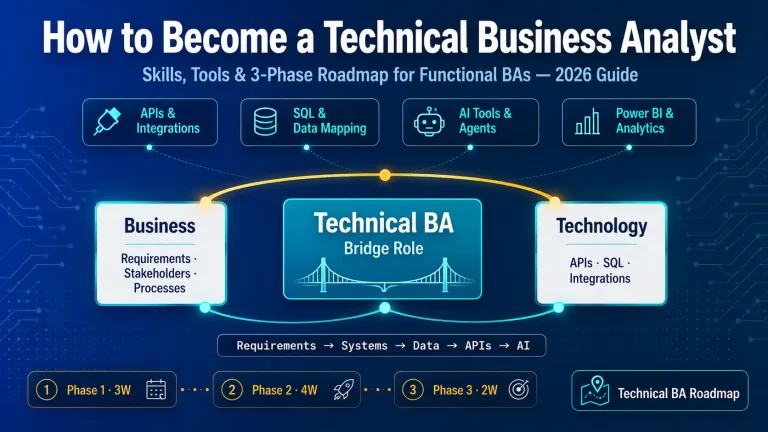
A technical business analyst is the bridge between business goals and IT development teams. A regular business analyst focuses on business needs and processes. A tech BA does that too, but also understands how the software actually works underneath.
The job usually follows two steps. First, you map the current process, often called the AS-IS state. Then you design the improved process, called the TO-BE state. A tech BA can go one level deeper. They can look at the database, the APIs, and the system design, and explain what is possible and what is not. This is why business analyst technical skills are in such high demand.
Why Technical Skills Matter for Business Analysts Today
Software keeps getting more complex, and business teams depend on data for almost every decision. A BA who understands systems and data can move faster and add more value. Here is what these skills unlock:
Self service data. You can pull your own reports with SQL instead of waiting days for the IT team.
Better requirements. You write clear, testable requirements that developers can build without guessing.
A shared language. You can talk to developers about APIs and databases and to stakeholders about outcomes.
Higher pay and roles. Tech BA roles usually sit a step above general BA roles in both scope and salary.
The Four Core Categories of Technical Business Analyst Skills
It helps to group the skills into four simple buckets. The table below maps each category to the key skills and the tools you are most likely to use on the job.
| Skill Category | Key Skills | Common Tools |
|---|---|---|
| Data Analysis and Databases | SQL, data extraction, data validation, reporting | SQL Server, MySQL, Excel, Power BI, Tableau |
| Process and Data Modeling | BPMN, UML, data mapping, wireframing | Visio, Lucidchart, Balsamiq, Figma |
| System Architecture and Integrations | REST and SOAP APIs, system design, ERP and CRM | Postman, Salesforce, Oracle |
| Software Development and Projects | Agile and Scrum, user stories, UAT | Jira, Confluence |
Google groups the same ground into two broad areas: core technical skills, such as SQL and APIs, and project frameworks and tools, such as Agile and Jira. Both views point to the same core set of tech BA skills. Let us go through each one.
1. Data Analysis and Database Skills
At the heart of business analysis is the ability to pull, read, and present data. This is the most requested group of technical skills for a business analyst.
SQL and Relational Databases
SQL is the single most valuable skill on this list. You use it to query relational databases like MySQL or SQL Server, filter data, and pull the exact records you need. A tech BA also uses SQL to validate data flows and dig into system problems. The goal is simple: get answers from the data without relying on the IT team for every request.
Microsoft Excel
Excel is still a core tool for every analyst. You should be comfortable with advanced features like Pivot Tables, VLOOKUP and XLOOKUP, and simple macros. These let you clean, sort, and summarize data quickly for stakeholders.
Business Intelligence Tools (Power BI and Tableau)
Business intelligence tools like Microsoft Power BI and Tableau help you turn raw numbers into clear stories. With them you build interactive dashboards that show trends and problems at a glance. Good dashboards turn complex datasets into insights that leaders can act on.
Basic Programming (Python or R)
You do not need to be a full developer. A basic grasp of a scripting language like Python or R is a real plus. It helps with exploratory data analysis and lets you automate slow, repeated tasks. Even a little Python goes a long way in modern data work.
2. Process and Data Modeling Skills
Modeling skills help you document how work happens now and design how it should happen later. These visuals make complex ideas easy for both business and IT to follow.
BPMN (Business Process Model and Notation)
BPMN is a standard way to map business processes. You use it to show operational flows, decision points, and where systems interact. A clear BPMN diagram removes a lot of confusion from a project.
UML (Unified Modeling Language)
UML helps you map software behavior. The three diagrams a tech BA uses most are Use Case Diagrams, Activity Diagrams, and Sequence Diagrams. They show who does what, in what order, and how the system responds.
Data Mapping and Wireframing
Data mapping shows how data moves from the front end that users see to the back end database. Wireframing shows what a screen should look like before anyone builds it. Prototyping tools like Balsamiq and Figma, along with diagram tools like Visio and Lucidchart, make this fast and clear.
3. System Architecture and Integration Skills
A tech BA needs a working picture of how modern software fits together. You do not have to build the systems, but you must understand how they connect.
API Documentation and Testing
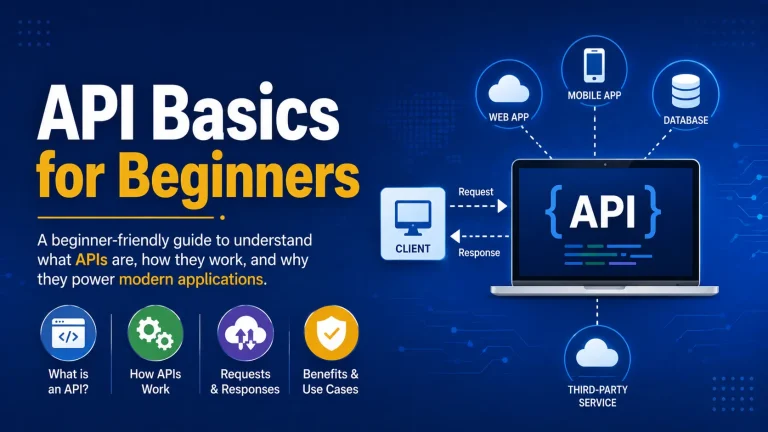
APIs are how different software systems talk to each other. You should understand REST and SOAP APIs and how data moves as JSON or XML payloads. Tools like Postman let you test API endpoints and confirm they return the right data. Clear API documentation is one of the top skills that Google highlights for this role.
System Design
Basic system design knowledge covers the front end, the middle tier, and the back end. When you understand these layers, you can judge what is feasible and spot limits early. That saves teams from promising features the system cannot support.
ERP and CRM Systems
Many projects run on enterprise platforms like Salesforce or Oracle. Knowing how these ERP and CRM systems handle customer data and process lifecycles helps you set realistic requirements and avoid surprises.
4. Software Development and Project Skills
This group covers how software gets built and managed. It is where the BA works most closely with the delivery team.
Agile and Scrum
Agile and Scrum are the standard way most teams build software today. You work in short sprint cycles, help manage the product backlog, and join daily standups. A tech BA writes detailed user stories and clear acceptance criteria, often using a Behavior Driven Development, or BDD, style so tests are easy to define.
Requirements Management Tools (Jira and Confluence)
You track work and store documentation in tools like Jira and Confluence. Jira handles issues, tasks, and backlogs. Confluence holds the shared notes and specs. Comfort with both keeps a project organized and easy to follow.
Software Testing and UAT
Before a release, someone has to confirm the system does what the business asked for. A tech BA runs User Acceptance Testing, or UAT, writes simple test scripts, and checks each feature against the agreed requirements. This is the last safety net before go live.
Technical Documentation: The Skill That Ties It Together
Writing is a technical skill in this role. A tech BA does more than write high level business notes. You write technical user stories, acceptance criteria, and system requirement specifications, often shortened to SRS. Good documentation turns a fuzzy idea into something a developer can build and a tester can check. It is one of the core skills Google lists for a tech BA.
Good documentation turns a fuzzy idea into something a developer can build and a tester can check.
Ready to Become a Technical Business Analyst?
Reading about SQL, APIs, and Agile is a start. Practicing them on real projects, under structured guidance, is what actually makes them stick. Techcanvass’s Technical Business Analyst Course covers all four skill categories in this guide, with hands-on, project-based learning.
Technical Skills by Career Stage: Entry Level vs Senior
You do not need every skill on day one. What matters shifts as you grow.
Entry Level Focus
- Basic SQL and confident Excel
- Writing clear user stories and acceptance criteria
- Working in Agile and using Jira
- Reading simple process diagrams
Senior Focus
- System design and API level thinking
- Data modeling and integration across systems
- Leading modeling sessions with BPMN and UML
- Guiding stakeholders through technical trade offs
How to Build Your Technical Business Analyst Skills
You can learn these skills in a clear order. Each step builds on the last, so you always have something useful to show.
Start with SQL and Excel
These give you fast wins and cover most daily data tasks.
Add a BI tool
Learn Power BI or Tableau and build a few real dashboards.
Master Agile and Jira
Practice writing user stories and running a backlog.
Learn process modeling
Get comfortable with BPMN and UML using a free tool like Lucidchart.
Get hands on with APIs
Use Postman to send requests and read JSON responses.
Consider a certification
A recognized business analyst certification can prove your skills and speed up job offers.
Final Thoughts
The best technical business analyst skills are the ones that help you turn business goals into working software. Start with the three that hiring teams ask for most: SQL, API documentation, and Agile. Then build out from there across data, modeling, and systems. You do not need to learn everything at once. Pick one skill, practice it on real work, and move to the next. Over time these skills add up to a career that sits right at the center of business and technology.
Looking for the bigger picture? This article covers the skills in depth. For the full journey, including qualifications, salary expectations, and how to land your first tech BA role, read our complete pillar guide: How to Become a Technical Business Analyst.
Frequently Asked Questions
What are the most important technical skills for a business analyst?
Do business analysts need to know how to code?
Is SQL important for a business analyst?
What is the difference between a business analyst and a technical business analyst?
How long does it take to learn technical business analyst skills?
Related Power BI Reads
Since Power BI shows up as a core tool in this guide, here is our full Power BI series for business analysts.