The 2026 Career Pivot: Business Analyst to Product Manager Roadmap

Listen to this article as a podcast
Table of Contents
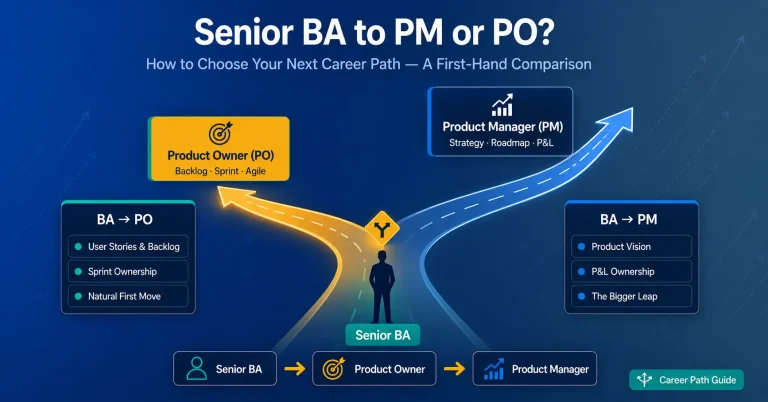
2026 is a turning point for tech professionals. AI is automating routine requirements gathering, which means the traditional Business Analyst (BA) role is changing fast. For many, the natural next step is the high-paying, strategic world of Product Management. If you want to move from business analyst to product manager, you aren’t just changing job titles. You are upgrading your entire career path.
“The transition from business analyst to product manager is the definitive career upgrade of 2026—moving you from documenting requirements to driving revenue.”
This guide breaks down exactly how to make this move. We will look at the salary jump you can expect and the specific skills you need to bridge the gap between “building requirements” and “building a business.”
Why 2026 is the Year of the Product Manager
Business analysis and product management are closer than ever, but the difference in value is huge. Companies in 2026 don’t just need people who can document features. They need leaders who can decide which features will make money.
This shift created a “Product Vacuum.” Organizations are desperate for people who have the data-driven rigor of a BA but the strategic vision of a Product Manager (PM). If you are comfortable with user stories and stakeholder management, you are 80% of the way there. The remaining 20% unlocks the next level of your career.
Helpful Resources for BAs and PMs
- Product Manager Interview Questions & Answers Prepare for your transition interview with these essential questions.
- Influencing Without Authority as a PM Learn the critical soft skill for leading teams without direct power.
- Outcome-Driven Innovation Shift your mindset from tracking outputs to delivering business value.
- Skills for AI Product Managers Essential technical and strategic skills for the AI era.
- Product Roadmap Strategy How to build strategic roadmaps that align with business goals.
Business Analyst vs Product Manager Salary: The Financial Leap
Money is often the biggest motivator for this switch. In 2026, the pay gap between execution-focused roles (BA) and strategy-focused roles (PM) grew significantly.
Here is a look at the Business Analyst vs Product Manager salary landscape for 2026.
The India Landscape (2026 Projections)
In India’s tech hubs like Bangalore, Mumbai, and Gurgaon, the jump is massive. A Senior BA often hits a ceiling around ₹18-20 LPA, while a Product Manager often starts near that figure and scales up quickly.
Business Analyst vs Product Manager Salary
| Role Level | Business Analyst | Product Manager | Potential Hike |
|---|---|---|---|
| Entry / Associate | ₹6.0 – 9.5 LPA | ₹12 – 18 LPA | ~50 – 90% |
| Mid-Level (4-7 Yrs) | ₹10 – 16 LPA | ₹18 – 35 LPA | ~100%+ |
| Senior / Lead | ₹18 – 24 LPA | ₹35 – 60+ LPA | ~150%+ |
The Global Picture (US & Remote)
For those looking at remote jobs or US-based roles, the difference is just as striking.
- Business Analyst: $85,000 – $95,000 / year
- Product Manager: $130,000 – $160,000 / year
Note: Salaries vary based on location, domain (FinTech and AI pay more), and certification levels.
The Gap Analysis: What You Have vs. What You Need
To make the switch, you need to analyze your own skills. You likely already have the “Hard Skills” of breaking down work. The gap is usually in Strategic Thinking and Ownership.
Here is how your current skills map to your future role:
1. The Overlap (Your Existing Toolkit)
- Requirements Gathering: You know how to translate vague ideas into concrete specs.
- Stakeholder Management: You deal with difficult clients or internal teams daily.
- Data Analysis: You are comfortable with SQL, Excel, and finding trends.
- Agile/Scrum: You likely already work in sprints and know the development lifecycle.
2. The Gap (Skills to Build)
This is where you need to focus your learning efforts in 2026.
The Gap Analysis
| Skill Area | Business Analyst Focus | Product Manager Focus |
|---|---|---|
| Focus | Internal: “How do we build this right?” | → External: “Why are we building this at all?” |
| Authority | Influence through logic & requirements. | → Influence without authority (Vision & Storytelling). |
| Metrics | Project delivery (Time, Budget, Scope). | → Business Outcomes (Revenue, Churn, Retention). |
| Planning | Functional Specifications & Backlogs. | → Product Roadmap & Strategic Vision. |
| Customer | User Acceptance Testing (UAT). | → Market Research & Customer Discovery. |
The Core Shift: From “How” to “Why”
The biggest hurdle for BAs isn’t learning a tool like Jira or Mixpanel. It is a mindset shift.
As a BA, your success is often defined by shipping a feature correctly. Did it meet the requirements? Were there bugs? As a PM, your success is defined by user value. Did anyone use the feature? Did it solve their problem? Did it make money?
To transition, you must stop asking, “What are the requirements?” Instead, start asking, “What is the problem we are trying to solve, and is it worth solving?”
Your 5-Step Roadmap to Transition
Step 1: Master the “Product Sense”
Start thinking like a PM in your current job. When a stakeholder asks for a feature, don’t just document it. Ask “Why?” Dig into the data. Understand the user journey. Suggest a smaller, faster experiment (MVP) instead of a massive build.
Step 2: Bridge the Technical Gap
You don’t need to code, but you do need to understand the business of technology. Learn how to track success using tools that PMs live in:
- Analytics: Google Analytics, Mixpanel, or Amplitude.
- Roadmapping: Aha!, Roadmunk, or advanced Jira structures.
- Collaboration: Miro or Mural for brainstorming sessions.
Step 3: Get Certified
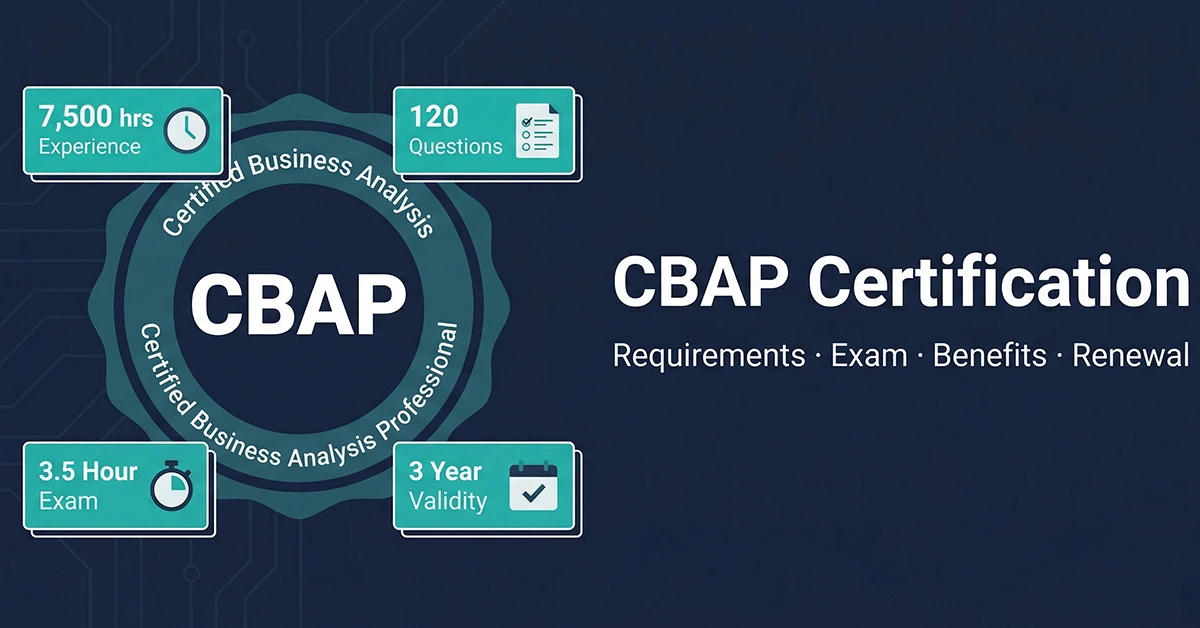
In a competitive market, a structured learning path signals your commitment. Experience is king, but a recognized certification (like CPOA or specialized Product Management training) helps bypass the “no experience” filter. It validates that you understand the product lifecycle, go-to-market strategy, and pricing models. These are topics rarely covered in standard BA roles.
Step 4: Build a Portfolio
Resume words are cheap. Evidence is expensive. Create a “Product Portfolio.”
- Side Project: Build a simple app or website (even using no-code tools).
- Case Study: Take a popular app (e.g., Spotify, Zomato) and write a “Product Teardown” suggesting a new feature. Back it up with mock market research and success metrics.
- Blog: Write about product strategy to showcase your thinking.
Step 5: Network & The Internal Pivot
The easiest way to get your first PM title is to transition internally.
- Find a Product Manager at your current company who is overloaded. (They all are.)
- Offer to take ownership of a small slice of their roadmap or a specific feature.
- Deliver it successfully using PM methodologies.
- Use that win to advocate for a title change.
Common Pitfalls to Avoid
- Becoming the “Backlog Groomer”: Don’t let your PM role become a glorified admin role where you only organize tickets. Fight for strategic work.
- Ignoring the “Soft” Skills: Product Management is 50% communication. If you can’t tell a compelling story to your engineers and stakeholders, your roadmap will fail.
- Over-indexing on Certificates: A certificate gets you the interview, but your portfolio and “product sense” get you the job. Balance theory with practice.
Conclusion
Moving from business analyst to product manager is one of the most natural and rewarding career pivots in the tech industry. You already speak the language of developers and stakeholders. Now you simply need to learn the language of the market.
2026 is the year to stop building what you are told and start deciding what gets built. The salary jump is real, the demand is high, and your roadmap starts today.